


Hey Seekers! What if Everything is Connected, From One Source?
We’ve journeyed through amazing ideas, from the deepest philosophical questions to practical ways to Unlock Your Inner Calm. We’ve seen that science points to an underlying order in the universe, and philosophy searches for a fundamental unity (Brahman and the Unified Field [blocked]).
Now, let’s explore Islam, a powerful spiritual path that begins with an incredibly direct and clear idea: Unity.
Islam doesn’t start with complicated theories. It starts with a simple, yet profound declaration: There is One.
Unity (Tawhid): The Single Source Behind Everything
In Islam, this idea of Unity, called Tawhid (pronounced: TOW-heed), is the absolute core. It doesn’t mean everything looks the same; in fact, it celebrates diversity! Think about it:
- The sky is vast and full of different clouds.
- The Earth has endless landscapes and creatures.
- Human experiences are incredibly varied.
Yet, Tawhid means recognizing that beneath all this amazing variety, there is One single, original Source for everything. This isn’t just a theory; it’s a way of looking at the entire universe.
This recognition brings incredible direction and purpose to life. If everything comes from One, then everything is subtly connected.
Surrender: A Different Kind of Strength
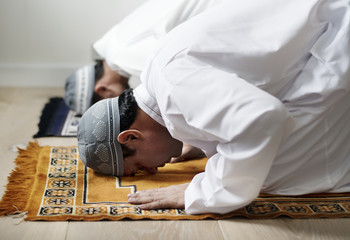
The very word “Islam” means “surrender” or “submission.” But don’t let that sound like weakness! In this context, it means something incredibly strong and empowering:
- It’s releasing the illusion that you can completely control everything. We’ve learned from science that the universe has laws far beyond our control (The Birth of Scientific Law: Mathematics and Motion).
- It’s acknowledging that your plans are limited, and your understanding is only a small piece of the puzzle.
- It’s actively aligning yourself with a greater, wiser order.
This isn’t passive resignation; it’s an active, conscious choice. Your ego (that part of you that wants to be in charge of everything) might resist, but your heart often longs for that feeling of being perfectly aligned with something vast and good. It’s like The Flow of Tao: Living Without Forcing – moving with the current of life rather than fighting it.
Remembrance (Dhikr): Staying Connected to the Source
Central to the Islamic path is remembrance, or Dhikr (pronounced: DHIK-er). This isn’t about remembering facts or dates. It’s about consciously remembering the Source of all existence.
In our busy lives, it’s so easy to get distracted. Dhikr is like hitting the pause button on forgetfulness.
- It can be a simple repetition of sacred phrases.
- A quiet moment of turning inward.
- A pause and a deep breath before you act.
Remembrance helps to steady your attention, bringing humility (without ever being humiliating!) and a strong sense of connection. It helps you keep that inner peace we talked about in The Inner Turn — From Question to Silence.
Discipline: Creating Awareness, Not Restriction
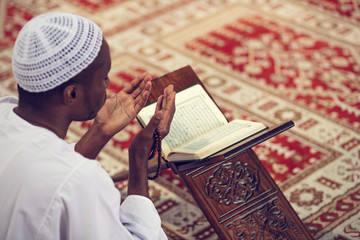
Islam emphasizes rhythm in daily life:
- Daily prayers (Salah).
- Regular pauses for reflection.
- Structured remembrance.
This discipline isn’t about restriction just for the sake of it. It’s about creating awareness. Without a rhythm, your attention can scatter everywhere. With rhythm, your intention deepens, and your actions become more meaningful. This is similar to how even Zen: Direct Seeing Without Concept emphasizes structured sitting meditation to cultivate clarity.
Community & Responsibility: Unity Beyond Yourself
The idea of Unity in Islam isn’t just about your connection to the Divine. It’s also about your connection to everyone else.
- Justice: Treating all people fairly.
- Compassion: Feeling and acting with kindness towards others.
- Responsibility: Recognizing your role in making the world a better place.
Faith isn’t just something you feel inside; it must lead to ethical actions in the world. Unity is incomplete if it ignores humanity. You are part of one human family, from one Source.
Trust in the Unseen: Beyond What You Can See
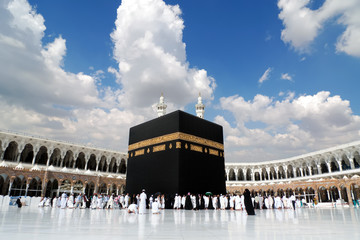
Islam teaches trust – not blind acceptance, but a deep confidence in what is beyond our immediate perception. Just like much of science deals with things we can’t see but trust are real (like atoms, gravity, or even your own thoughts!), Islam invites trust in the unseen Source.
- Your breath keeps going without you consciously commanding it.
- Your heart beats.
- Seeds grow into trees.
Trust acknowledges that reality is far larger and more intricate than what we can control or even fully see. This kind of trust can soften anxiety and bring a deep sense of peace.
