


Table of Contents
ToggleBhagavad Gita Chapter 3 Karma Yoga
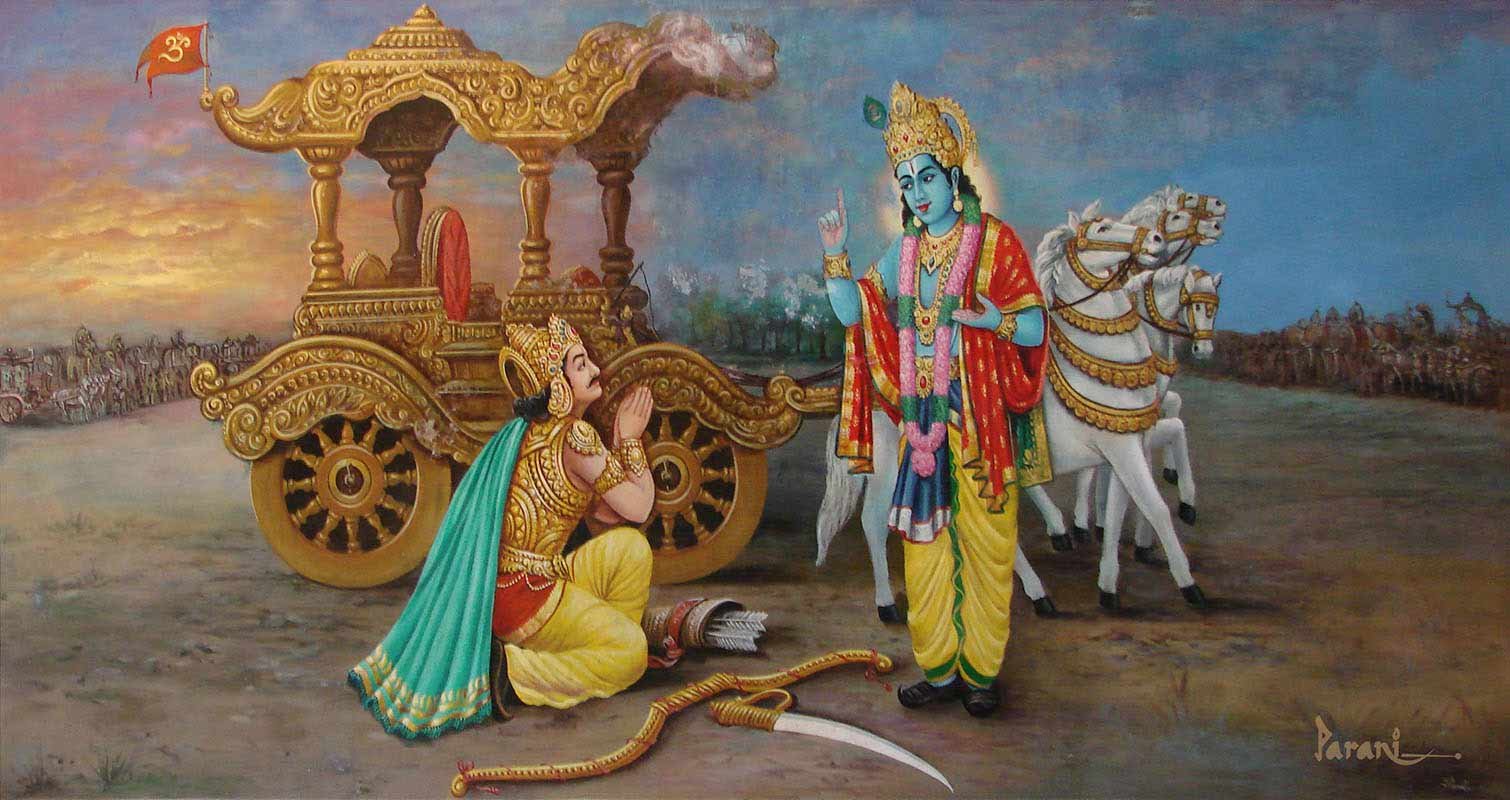
Bhagavad Gita Chapter 3 Karma Yoga marks the turning point where spiritual insight meets practical life. After revealing the eternal nature of the soul, Krishna now addresses a deeper confusion — if wisdom brings peace, why must one still act in the world?
In this chapter, Arjuna’s hesitation reflects our own struggle between contemplation and responsibility. Krishna teaches that action cannot be avoided, but attachment can be transformed. Karma Yoga is not about abandoning work; it is about performing duty without selfish expectation.
Through this teaching, Bhagavad Gita Chapter 3 Karma Yoga shows how everyday responsibilities — when done with awareness and offering — become a path to inner freedom rather than bondage.
Bhagavad Gita — Chapter 3
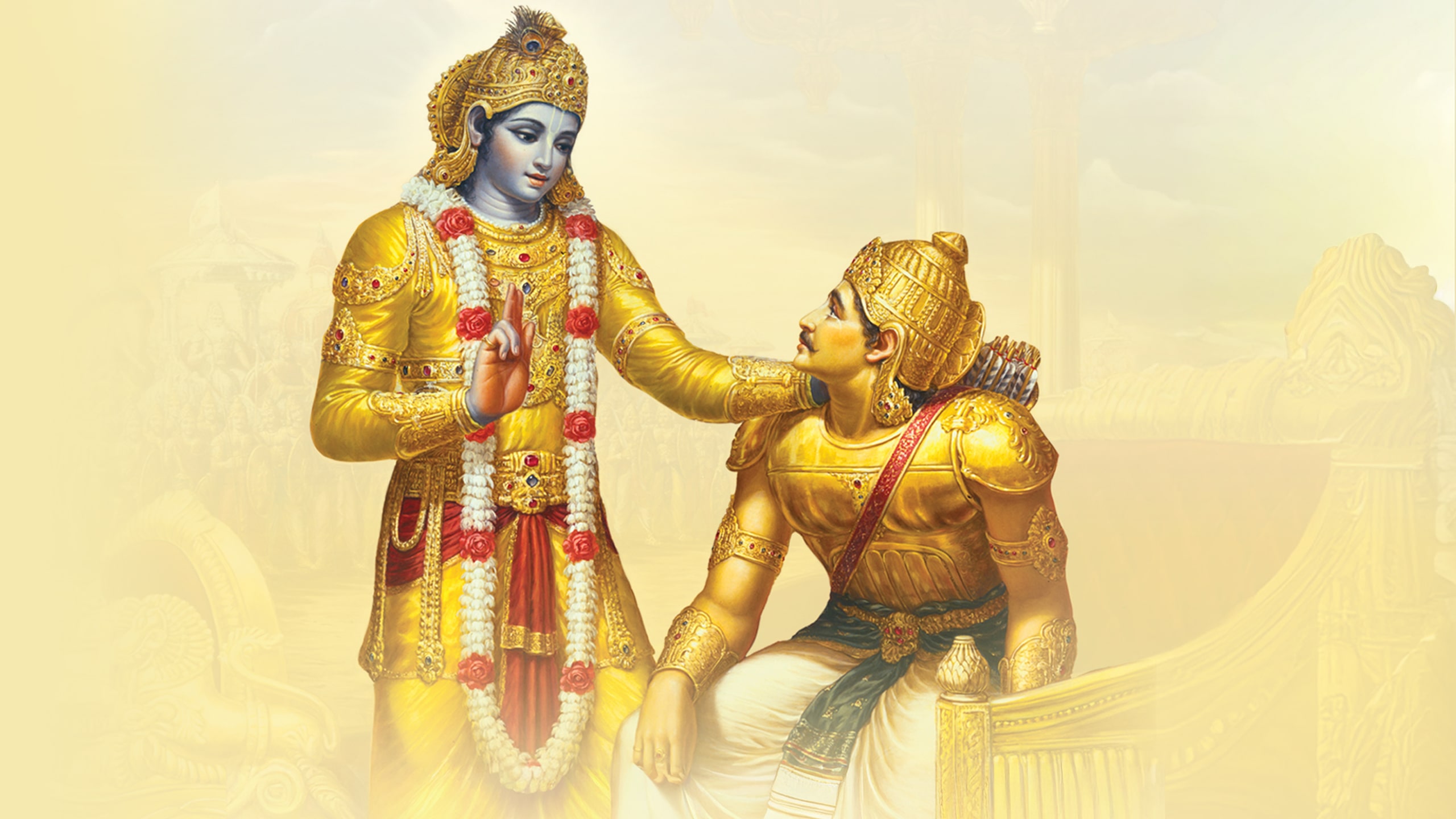
In this humanized dialogue, Arjun is frustrated—he wants to sit in a cave and meditate, but Krishna is telling him he must get his hands dirty.
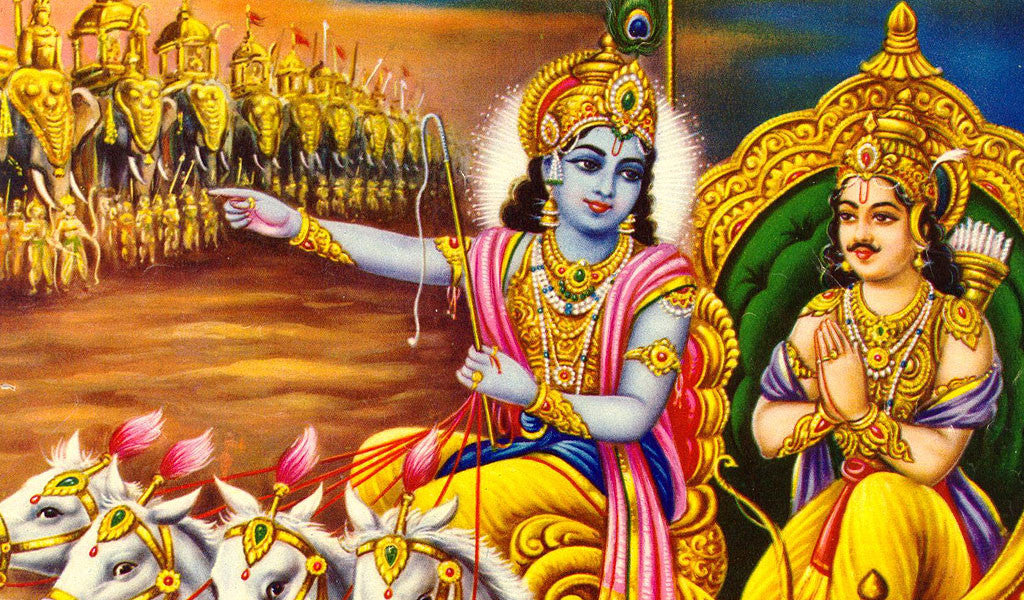
The Dialogue: Karma Yoga
Arjun: (Dropping his bow, confused) “Krishna, you just spent an hour telling me how beautiful the soul is and how meditation is the ultimate peace. If wisdom is so great, why are you pushing me into this terrible war? If I want God, shouldn’t I just quit and go sit in the forest?”
Krishna: (With a calm, knowing smile) “Arjun, nobody—not for a single second—can actually do ‘nothing.’ Even as you sit there, your heart is beating, your lungs are breathing, and your mind is racing. Running away to the forest doesn’t stop your nature. A man who sits still but dreams of worldly pleasures is just a hypocrite.”
Arjun: “So, I’m trapped? I have to act?”
Krishna: “Not trapped, Arjun. Refined. Think of it like this: The world is a giant wheel of sacrifice. The rain feeds the crops, the crops feed you, and you must give back through your work. If you only take and never give, you are a thief of the universe.”
Arjun: “But work brings stress, Krishna. It brings ego and greed.”
Krishna: “Only if you think you are the ‘Boss’ of the results. Do your duty because it needs to be done, not because you want a trophy. Perform your work as an offering to Me. When you stop obsessing over ‘What’s in it for me?’, the work itself becomes your meditation.”
The Anatomy of Action
Krishna explains the hierarchy of how we get distracted:
- The Senses: They want comfort.
- The Mind: It follows the senses like a dog on a leash.
- The Intellect: It tries to make sense of it all.
- The Self (Soul): This is the true “You” that sits above the chaos.
-
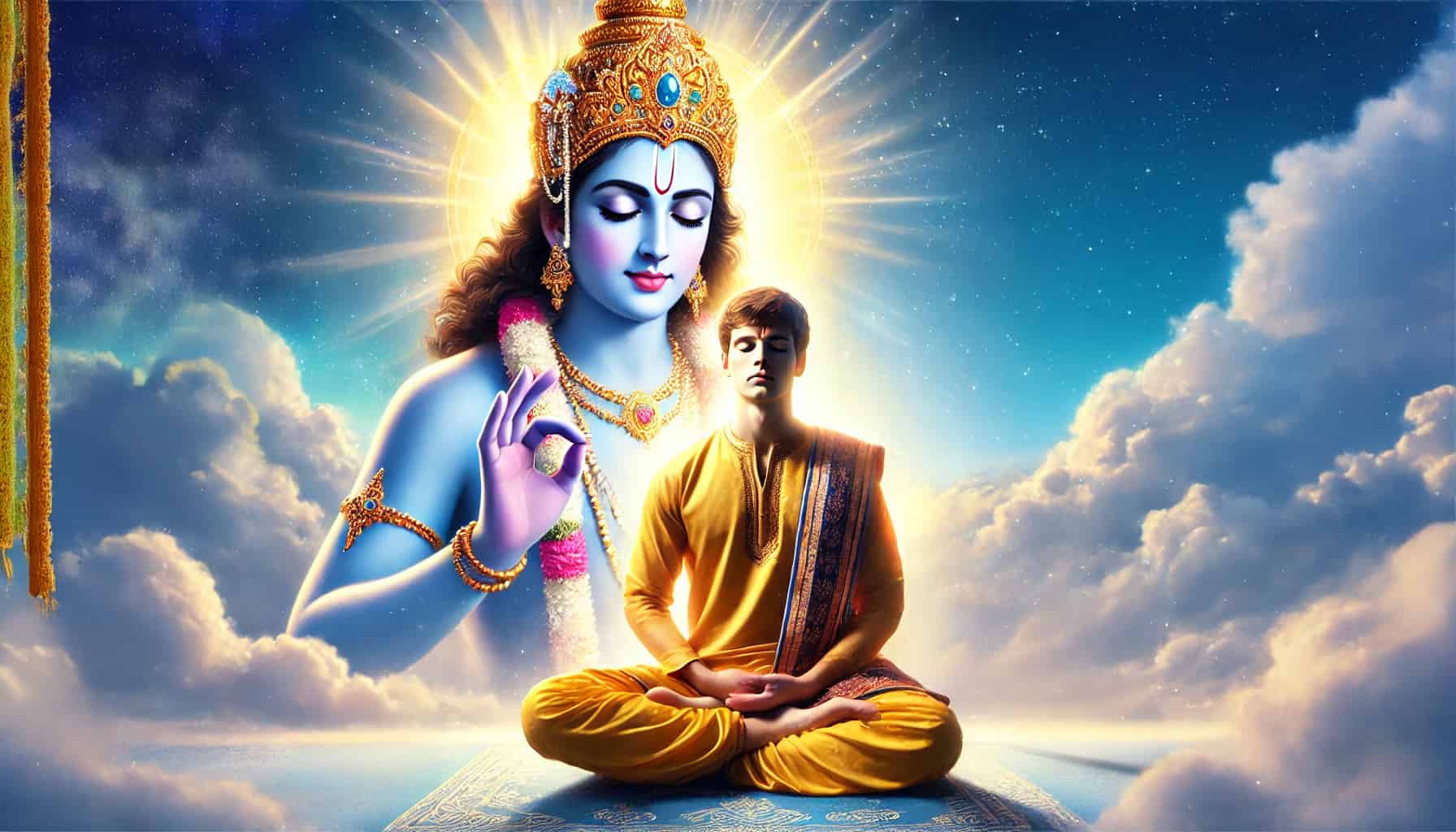
🧘 Meditation Box: The “Observer” Technique
To practice the essence of Chapter 3, try this 2-minute reset during your workday:
Identify the Task: Pick one thing you have to do (washing dishes, writing an email, driving).
The Shift: Tell yourself, “I am the instrument, not the owner.”
The Release: Focus entirely on the quality of the action. If the result is good, say “Thank you.” If the result is bad, say “I did my best” and move on.
The Result: Notice how the heavy weight of “success vs. failure” lifts off your shoulders.
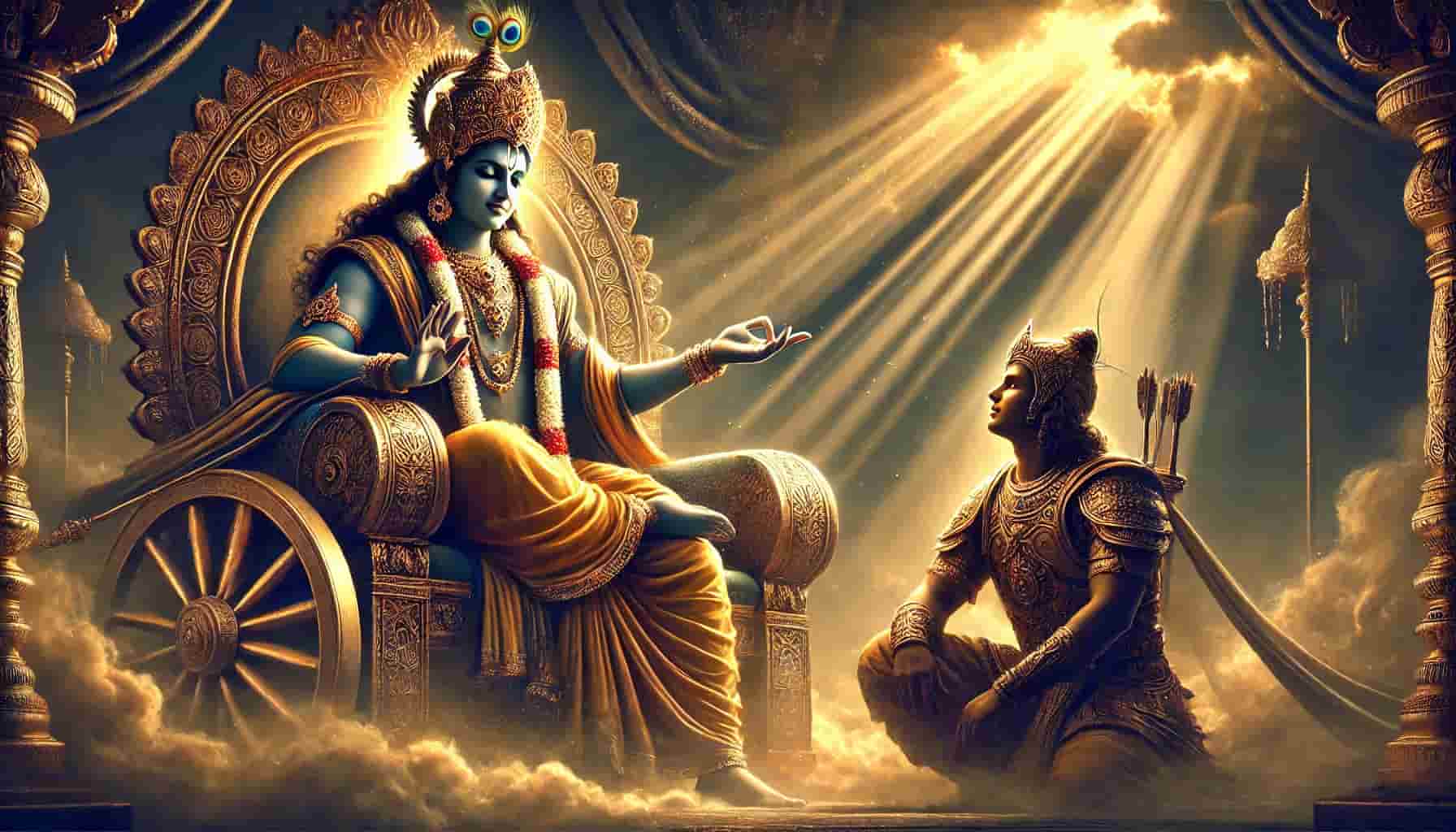
Arjun: “But what about my desires? They pull me like a magnet.”
Krishna: “Desire is like a fire, Arjun. It’s never satisfied by more fuel. Use your intellect to realize that you are greater than your cravings. Slay the ‘enemy’ of selfish desire, and you will find that even in the middle of a battle, you are at peace.”
Would you like me to summarize the next chapter, or perhaps generate an image of the “Chariot of the Mind” as Krishna describes it?
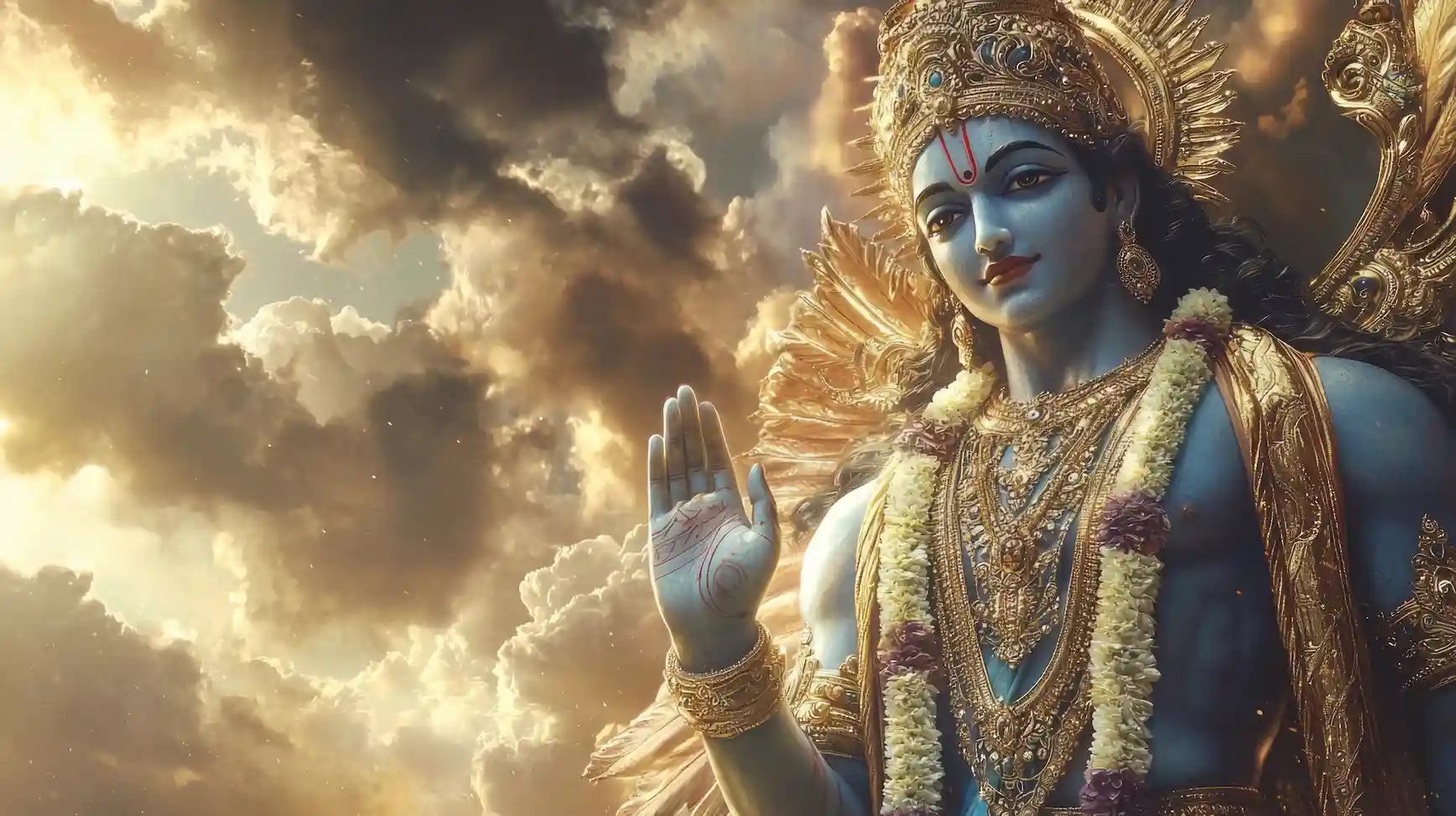
Action Without Attachment
After hearing about steadiness and wisdom, Arjuna is still uncertain. He asks Krishna directly:
“If knowledge is superior, why urge me toward action?”
This is a natural question. If inner peace is the goal, should one withdraw from life? Krishna answers firmly. No one can remain truly inactive. Even in stillness, the mind acts. Avoiding responsibility does not bring freedom. Right action does.
The Necessity of Action
Krishna explains that life itself is movement.
Breathing is action.
Thinking is action.
Living is action.
To refuse action out of confusion only increases unrest.
Better to act consciously
than to withdraw carelessly.
Action performed in harmony with duty becomes purification.

Selfless Action
The central teaching of this chapter is Karma Yoga.
Perform action without selfish attachment.
Not because action is unimportant,
but because selfish expectation disturbs balance.
When action is done only for personal gain,
fear and anxiety follow.
When action is done as contribution,
clarity grows.
Krishna reminds Arjuna:
“The world is sustained by action.”
Work done with integrity supports order.
Leading by Example
Krishna gives a powerful insight.
Whatever a person of influence does,
others follow.
Action is not only personal —
it is social.
Avoiding duty affects more than oneself.
Responsibility is not burden.
It is participation.
The wise act not because they need recognition,
but because it is right.
Desire and Restlessness as per Bhagavad Gita Chapter 3
Arjuna asks:
“What drives a person to act wrongly, even unwillingly?”
Krishna answers:
Desire.
Uncontrolled craving clouds judgment.
When desire dominates, clarity fades.
Desire is not destroyed by suppression.
It is understood and gradually disciplined.
Awareness weakens compulsion.
Discipline of the Senses as per Bhagavad Gita Chapter 3
Krishna advises steady regulation.
First control outward actions.
Then calm the mind.
If the senses dominate, wisdom weakens.
If awareness guides the senses, balance strengthens.
This is not harsh repression.
It is intelligent moderation.

Action as Offering
One of the subtle teachings of this chapter is the idea of offering.
When action is done as offering —
not merely as transaction —
it becomes lighter.
The ego reduces.
Comparison reduces.
Work becomes participation in a larger order.

Bhagavad Gita Chapter 3 Reflective Questions
• Do I avoid difficult duties hoping for comfort?
• When I work, is my mind fixed only on results?
• What desire most disturbs my clarity?
• Can I perform one task today as contribution rather than self-display?
• Where do I act impulsively instead of consciously?
• Do my actions influence others more than I realize?
Let these questions stay with you.
They guide without forcing.

Meditation Box — Acting Without Anxiety
Sit quietly for a few minutes.
Bring to mind one responsibility that feels heavy.
Observe your thoughts about success or failure.
Notice the tension in the body.
Now silently repeat:
“I will do my best. The result is not in my control.”
Take slow breaths.
Feel the difference between effort and strain.
When ready, open your eyes.
Let your next action come from steadiness, not pressure.
Bhagavad Gita Chapter 3 deepens the teaching.
Peace is not escape.
Wisdom is not withdrawal.
Clarity must express itself in action.
Act.
But act without inner agitation.
The journey continues.
Our next Journey please clik here for chapter 11 https://lifedevote.com/bhagavad-gita-the-vision-of-the-whole-chapter-11/Vishwa Roop Darshan.
