


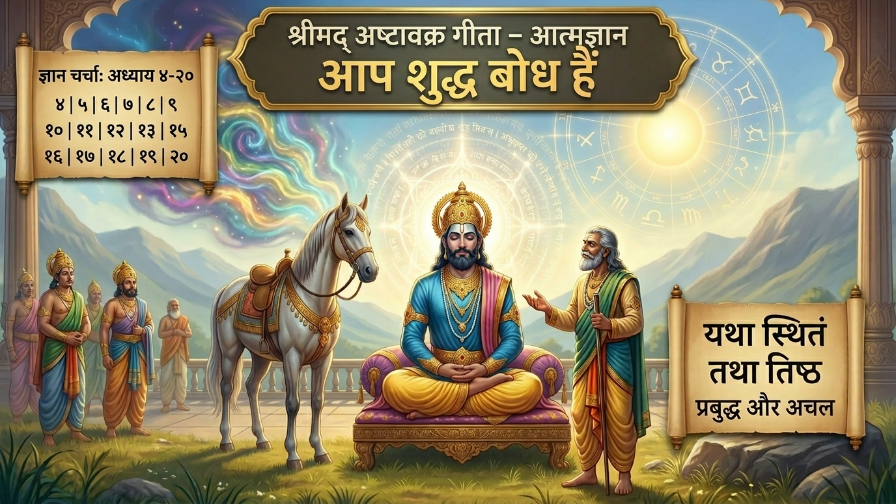
Ashtavakra Gita Deep Learning : आत्मज्ञान और परम मुक्ति
Ashtavakra Gita Deep Learning कोई पारंपरिक आध्यात्मिक नियमावली नहीं है जो क्रमिक प्रगति की बात करती हो, बल्कि यह अद्वैत वास्तविकता का एक सीधा और तीव्र प्रसारण है। यह ग्रंथ इस क्रांतिकारी आधार पर कार्य करता है कि साधक को कुछ भी नया प्राप्त नहीं करना है, बल्कि केवल अपनी उस सहज स्वतंत्रता को पहचानना है जो पहले से ही मौजूद है। आत्मज्ञान और परम मुक्ति का यह मार्ग बौद्धिक समझ से परे जाकर व्यक्ति की पहचान को सीमित अहंकार (ego) से हटाकर सीधे उस अनंत ‘स्व’ (Self) में स्थापित कर देता है जो कभी बंधन में था ही नहीं। ऋषि अष्टावक्र और राजा जनक के बीच का यह संवाद हमें याद दिलाता है कि मुक्ति कोई भविष्य का लक्ष्य नहीं है, बल्कि एक वर्तमान सत्य है जिसे केवल अज्ञानता के परदे हटाकर देखा जा सकता है।
अष्टावक्र गीता के सार को गहराई से समझने के लिए यह वीडियो देखें]
राजा जनक और ऋषि अष्टावक्र का आत्मज्ञान संवाद]
Ashtavakra Gita Deep Learning और परम मुक्ति के लिए जागरूकता का महत्व
अष्टावक्र के दर्शन में, आप शरीर या मन के विकारों से पूरी तरह अलग हैं; आप वह साक्षी चेतना (witnessing consciousness) हैं जो हर अनुभव को प्रकाशित करती है। यह अहसास कि आप ही वह प्रकाश हैं, आपको संसार के द्वंद्वों से ऊपर उठा देता है। इस आध्यात्मिक यात्रा को और अधिक गहराई से समझने के लिए आप हमारे विस्तृत लेख पढ़ सकते हैं जैसे कि अष्टावक्र गीता और राजा जनक का आत्मज्ञान: रकाब क्षण का रहस्य जो इस संवाद की नींव को समझाता है। इसके अतिरिक्त, ज्ञान कर्म संन्यास योग का रहस्य कर्म और ज्ञान के दिव्य संगम पर प्रकाश डालता है, जबकि Ashtavakra Gita meaning and teaching आपको ग्रंथ के गूढ़ अर्थों से परिचित कराएगा। जीवन में संतुलन के लिए कर्म योग अध्याय 3 के निष्काम कर्म और भक्ति योग: मानसिक शांति का मार्ग के समर्पण भाव को समझना भी आत्मज्ञान और परम मुक्ति की दिशा में सहायक सिद्ध होता है।
ध्यान और आत्म-चिंतन Ashtavakra Gita Deep Learning
जब साधक इस सत्य को आत्मसात कर लेता है, तो वह ‘स्वभाव’ (Svabhava) की स्थिति में प्रवेश करता है, जहाँ ध्यान कोई कठिन अभ्यास नहीं बल्कि जागरूकता का स्वयं में सहज विश्राम बन जाता है। यहाँ मन समुद्र की उस गहराई की तरह शांत हो जाता है जहाँ सतह की लहरें उसे विचलित नहीं कर पातीं। यह अवस्था प्रयासहीन है क्योंकि इसमें कुछ भी बदलने या पकड़ने की इच्छा शेष नहीं रहती।
अष्टावक्र गीता के मुख्य दार्शनिक सिद्धांत:
- शुद्ध जागरूकता (Pure Awareness): आप शरीर, मन या बुद्धि नहीं, बल्कि वह साक्षी हैं जो इन सबका अवलोकन करता है।
- प्रयासहीनता (Effortlessness): मुक्ति के लिए किसी कठिन अनुष्ठान की आवश्यकता नहीं है; यह केवल बोध का विषय है।
- वर्तमान में मोक्ष (Present Liberation): आप अभी इसी क्षण मुक्त हैं; बंधन केवल एक संज्ञानात्मक त्रुटि या भ्रम है।
- अद्वैत का आनंद (Non-dual Bliss): आनंद कोई बाहरी अनुभव नहीं, बल्कि ‘स्व’ का अपना स्वभाव है।
- कैवल्य (Absolute Aloneness): यह अकेलापन नहीं, बल्कि वह पूर्णता है जहाँ आत्मा स्वयं को ही सर्वत्र देखती है।
- अकर्ता भाव (Non-doership): शरीर और मन कार्य करते हैं, लेकिन साक्षी चेतना हमेशा अचल और अप्रभावित रहती है।
- माया का मिथ्यात्व (Illusion of World): संसार को चेतना के ऊपर एक अधिरोपण माना गया है, जिसका कोई स्वतंत्र अस्तित्व नहीं है।
- इच्छा का अंत (End of Desire): जब व्यक्ति स्वयं में पूर्ण हो जाता है, तो बाहरी संसार की इच्छाएँ स्वतः समाप्त हो जाती हैं।
- स्थिर प्रज्ञा (Equanimity): लाभ-हानि, सुख-दुख और सिद्धि-असिद्धि में एक समान बने रहना ही ज्ञान का लक्षण है।
- परम मौन (Ultimate Silence): अंतिम अवस्था वह है जहाँ शब्द और विचार पूरी तरह विलीन हो जाते हैं।
आत्मज्ञान और परम मुक्ति के अंतिम सोपान Ashtavakra Gita Deep Learning
अष्टावक्र गीता के उत्तरार्ध में ‘जीवन्मुक्त’ (Jivanmukta) की स्थिति का वर्णन किया गया है, जो इस संसार में रहते हुए भी पूरी तरह से मुक्त है। वह व्यक्ति बिना किसी ‘कर्ता’ भाव के कार्य करता है और जीवन को एक सहज प्रवाह की तरह स्वीकार करता है। उसकी दृष्टि में, कुछ भी त्यागने योग्य नहीं है और न ही कुछ ग्रहण करने योग्य, क्योंकि सब कुछ उसी एक अनंत चेतना का विस्तार है। अंततः, राजा जनक उस शिखर पर पहुँचते हैं जहाँ ज्ञाता, ज्ञेय और ज्ञान का भेद मिट जाता है और केवल ‘परम मौन’ शेष रह जाता है।
Ashtavakra Gita Chapters 10–20 की यह यात्रा हमें सिखाती है कि हमारे और हमारे वास्तविक स्वरूप के बीच की दूरी शून्य है। जैसे ही हम “मैं” के झूठे अहंकार को त्यागते हैं, हम अपनी ही महिमा में प्रतिष्ठित हो जाते हैं।
यदि आप भी अपने जीवन में स्थायी शांति और आत्मज्ञान और परम मुक्ति का अनुभव करना चाहते हैं, तो अष्टावक्र के इन कालातीत सूत्रों का मनन शुरू करें।
अक्सर पूछे जाने वाले प्रश्न Ashtavakra Gita Deep Learning
1. अष्टावक्र गीता के अनुसार ‘स्वभाव’ का क्या अर्थ है? ‘स्वभाव’ का अर्थ है अपनी प्राकृतिक अवस्था में बिना किसी कृत्रिम प्रयास या संघर्ष के विश्राम करना। यह वह स्थिति है जहाँ ध्यान एक सहज प्रक्रिया बन जाती है।
2. क्या मुक्ति के लिए संसार छोड़ना आवश्यक है? नहीं, अष्टावक्र के अनुसार सच्चा वैराग्य बाहरी संसार को छोड़ने में नहीं, बल्कि आंतरिक आसक्ति और ‘पकड़ने वाले मन’ को छोड़ने में है।
3. ‘जीवन्मुक्त’ व्यक्ति के क्या लक्षण हैं? वह व्यक्ति संसार में सक्रिय रहते हुए भी आंतरिक रूप से अछूता रहता है। वह बिना अहंकार के कार्य करता है और सुख-दुख के प्रति पूर्णतः समभाव रखता है।
4. क्या अष्टावक्र गीता में ध्यान की मनाही की गई है? अष्टावक्र ध्यान को एक ‘अभ्यास’ के रूप में नहीं, बल्कि ‘होने’ (being) के रूप में देखते हैं। वे उस ध्यान का विरोध करते हैं जो अहंकार को पुष्ट करता है कि “मैं ध्यान कर रहा हूँ”。
5. अध्याय 20 का अंतिम संदेश क्या है? अध्याय 20 पूर्ण विसर्जन की स्थिति है जहाँ शब्द समाप्त हो जाते हैं। राजा जनक स्वीकार करते हैं कि अब कहने को कुछ शेष नहीं है क्योंकि सब कुछ उस एक ‘स्व’ में विलीन हो गया है।
