


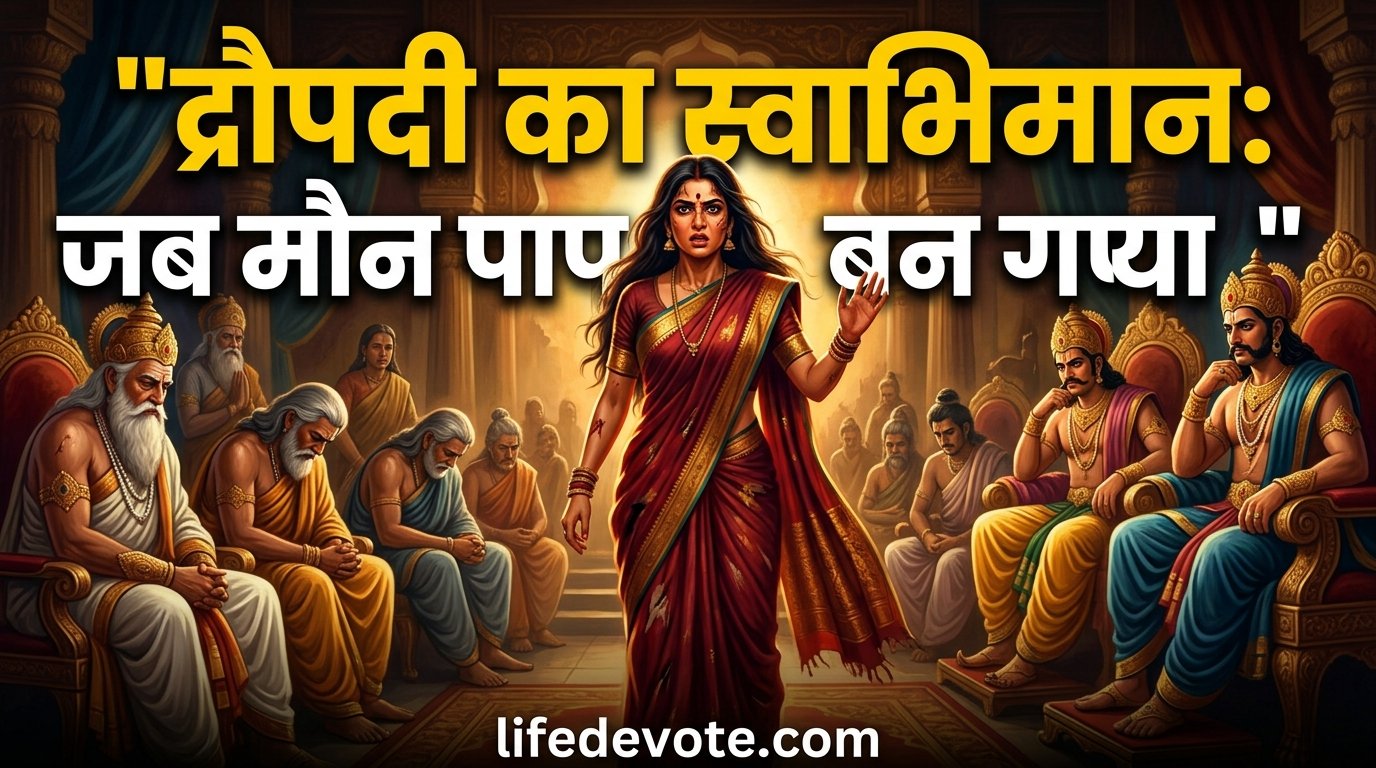
Draupadis Stand for Dignity : और वह दिन जब मौन पाप बन गया
महाभारत के इतिहास में कई ऐसी घटनाएँ हैं जिन्होंने समाज की नैतिक नींव को चुनौती दी, लेकिन द्रौपदी का चीर-हरण और उसके द्वारा उठाया गया सवाल सबसे अधिक प्रभावशाली है। यह केवल एक रानी के अपमान की कहानी नहीं है, बल्कि यह अन्याय के विरुद्ध Draupadis Stand for Dignity की एक ऐसी गूँज है जो आज भी प्रासंगिक है। यह कहानी हमें सिखाती है कि जब सत्ता और विद्वान मौन हो जाते हैं, तो वह मौन भी अपराध की श्रेणी में आता है।
द्रौपदी के साहस की कहानी को सुनने के लिए ऑडियो को सुनें।
द्यूत क्रीड़ा: एक साम्राज्य के पतन की शुरुआत Draupadis Stand for Dignity
पांडवों ने अपनी मेहनत और कौशल से एक अत्यंत भव्य महल का निर्माण किया था, जिसने उनके चचेरे भाई दुर्योधन के मन में ईर्ष्या की आग जला दी थी। इसी ईर्ष्या के वशीभूत होकर, शकुनी की चालों के साथ एक द्यूत क्रीड़ा (जुए का खेल) आयोजित की गई। इस खेल में युधिष्ठिर अपना विवेक खो बैठे और धीरे-धीरे सब कुछ हार गए।
खेल के दौरान पांडवों ने क्या-क्या खोया:
- अपनी अपार धन-संपत्ति और स्वर्ण भंडार।
- अपना विशाल साम्राज्य और राजसी अधिकार।
- अपने चारों भाइयों की स्वतंत्रता।
- स्वयं अपनी स्वतंत्रता और अंत में अपनी पत्नी, द्रौपदी।
यह केवल धन की हानि नहीं थी, बल्कि यह नैतिक मूल्यों का पतन था जिसने अंततः Draupadi’s Stand for Dignity जैसी स्थिति उत्पन्न की। जब युधिष्ठिर ने स्वयं को हारने के बाद द्रौपदी को दांव पर लगाया, तो उन्होंने न केवल अपनी मर्यादा को खतरे में डाला, बल्कि धर्म के सूक्ष्म सिद्धांतों को भी दरकिनार कर दिया।
वीडियो देखें और द्रौपदी की बेबसी महसूस करें Draupadis Stand for Dignity
द्रौपदी का प्रश्न केवल महाभारत की सभा से नहीं था — वह हर उस समाज से था जहाँ अन्याय के सामने मौन को स्वीकार कर लिया जाता है। यह वीडियो द्रौपदी के आत्मसम्मान, धर्म की परीक्षा और उस ऐतिहासिक क्षण के गहरे दार्शनिक अर्थ को समझने की एक गंभीर यात्रा है।
महाभारत की यह घटना आज भी उतनी ही प्रासंगिक है जितनी हजारों वर्ष पहले थी। जब सत्ता मौन हो जाए और सत्य अकेला खड़ा रह जाए, तब द्रौपदी की आवाज़ हमें याद दिलाती है कि धर्म केवल विचार नहीं, बल्कि अन्याय के विरुद्ध खड़े होने का साहस है। यदि यह चिंतन आपको स्पर्श करे, तो अपने विचार अवश्य साझा करें।
एक रानी का साहसी प्रश्न: – Draupadis Stand for Dignity
जब दुर्योधन के दूत ने द्रौपदी को सभा में चलने के लिए कहा, तो द्रौपदी ने घबराने के बजाय एक ऐसा तर्कसंगत प्रश्न किया जिसने पूरी सभा को निरुत्तर कर दिया। उन्होंने पूछा, “क्या राजा युधिष्ठिर ने मुझे दांव पर लगाने से पहले खुद को हारा था या मुझे?”। यह प्रश्न केवल एक व्यक्तिगत बचाव नहीं था, बल्कि एक गहरा कानूनी और नैतिक सवाल था। यदि युधिष्ठिर स्वयं को हारकर दास बन चुके थे, तो उन्हें किसी अन्य व्यक्ति, यहाँ तक कि अपनी पत्नी को भी दांव पर लगाने का अधिकार कैसे था?।
[यहाँ वीडियो एम्बेड करें] कैप्शन: देखें: महाभारत की सभा में द्रौपदी का वह सवाल जिसने धर्म की नींव हिला दी।
द्रौपदी का यह तर्क Draupadi’s Stand for Dignity का पहला स्तंभ था, जिसने सभा में बैठे भीष्म और द्रोणाचार्य जैसे दिग्गजों की विद्वत्ता को चुनौती दी। यह दिखाता है कि द्रौपदी केवल एक पीड़ित नहीं थीं, बल्कि एक प्रखर बुद्धि वाली महिला थीं जो न्याय की बारीकियों को समझती थीं।
कुरु सभा का मौन: जहाँ विद्वता हार गई- Draupadis Stand for Dignity
दुर्योधन के आदेश पर दुशासन द्रौपदी को उनके बालों से पकड़कर घसीटते हुए सभा में ले आया। एक रानी के लिए, जो पूजनीय थी, यह व्यवहार अत्यंत अपमानजनक था। द्रौपदी ने सभा में उपस्थित बड़ों से न्याय की गुहार लगाई, लेकिन वहां एक भयावह सन्नाटा पसरा रहा।
सभा में उपस्थित वे दिग्गज जो मौन रहे:
- पितामह भीष्म: जो अपनी प्रतिज्ञाओं में बंधे होने के कारण कुछ न बोल सके。
- गुरु द्रोणाचार्य: जिन्होंने राजभक्ति के नाम पर चुप्पी साधे रखी。
- महारथी कर्ण और अन्य योद्धा: जिन्होंने इस अन्याय को रोकने के बजाय इसे देखा।
यह सन्नाटा इस बात का प्रतीक था कि जब शक्तिशाली लोग अन्याय को होते हुए देखते हैं और चुप रहते हैं, तो वे भी उस पाप के उतने ही भागीदार बन जाते हैं। द्रौपदी ने निर्भीकता से कहा कि अन्याय की उपस्थिति में मौन रहना स्वयं में एक अन्याय है।
अपमान की पराकाष्ठा और दिव्य हस्तक्षेप-
जब द्रौपदी के तर्कों का कोई उत्तर नहीं मिला, तो दुर्योधन ने क्रूरता की सारी सीमाएँ लांघ दीं और द्रौपदी को निर्वस्त्र करने का आदेश दिया। उस समय द्रौपदी ने महसूस किया कि इस मानवीय सभा में कोई भी उनकी रक्षा नहीं करेगा—न उनके शक्तिशाली पति और न ही वे विद्वान जिन्हें धर्म का ज्ञाता कहा जाता था。
अंततः, उन्होंने अपनी आँखें बंद कीं और भगवान कृष्ण (गोविंद) को पुकारा। उन्होंने स्वयं को पूरी तरह ईश्वर के चरणों में समर्पित कर दिया। इसके बाद जो हुआ वह एक चमत्कार था:
- जैसे ही दुशासन ने उनके वस्त्र को खींचना शुरू किया, वस्त्र अंतहीन रूप से बढ़ता गया।
- सभा वस्त्रों के ढेर से भर गई, लेकिन द्रौपदी का सम्मान सुरक्षित रहा।
- थक कर दुशासन जमीन पर गिर पड़ा, लेकिन वह द्रौपदी की गरिमा को भंग नहीं कर सका।
यह घटना द्रौपदी का स्वाभिमान की जीत थी, जहाँ दैवीय कृपा ने उस मान-मर्यादा की रक्षा की जिसे समाज ने त्याग दिया था।
प्रतिज्ञा जिसने इतिहास बदल दिया-
इस अपमान ने द्रौपदी के मन पर गहरा घाव छोड़ा। उन्होंने सभा में एक भीषण प्रतिज्ञा ली कि वे तब तक अपने बाल नहीं बांधेंगी जब तक कि वे दुशासन के रक्त से न धोए जाएँ। यह प्रतिज्ञा केवल क्रोध का परिणाम नहीं थी, बल्कि यह न्याय की मांग थी। इसी अपमान और प्रतिज्ञा ने कुरुक्षेत्र के युद्ध के बीज बोए, जहाँ धर्म की स्थापना के लिए अधर्मियों का विनाश आवश्यक हो गया था。
द्रौपदी का व्यक्तित्व हमें सिखाता है कि:
- आत्म-सम्मान के लिए प्रश्न पूछना आवश्यक है।
- कठिन समय में भी अपना साहस नहीं खोना चाहिए。
- सच्ची भक्ति और समर्पण में ही सुरक्षा निहित है。
आज भी, द्रौपदी की आवाज सदियों से गूँजती हुई हर पीढ़ी से पूछती है कि जब सत्य जानने वाले लोग चुप रहते हैं, तो धर्म का क्या होता है?।
यदि द्रौपदी के साहस, धर्म, अन्याय के विरोध और महाभारत के गहरे दार्शनिक अर्थों को समझना चाहते हैं, तो ये लेख भी अवश्य पढ़ें —
भगवद्गीता अध्याय 4 : ज्ञान और कर्म का रहस्य
हिंदू दर्शन के अद्भुत रहस्य
हिंदू दर्शन : प्रकृति से ब्रह्म तक की यात्रा
समर्पण और संघर्ष : गजेन्द्र मोक्ष की यात्रा
अक्सर पूछे जाने वाले प्रश्न
1. द्रौपदी ने सभा में क्या प्रश्न पूछा था? द्रौपदी ने पूछा था कि क्या युधिष्ठिर ने खुद को हारने के बाद उन्हें दांव पर लगाया था, क्योंकि यदि वे स्वयं स्वतंत्र नहीं थे, तो उन्हें किसी और को दांव पर लगाने का अधिकार नहीं था।
2. Draupadi’s Stand for Dignity का क्या अर्थ है? इसका अर्थ है अपने आत्म-सम्मान और गरिमा के लिए अडिग रहना, भले ही पूरी दुनिया आपके खिलाफ खड़ी हो या चुप रहे।
3. द्रौपदी की रक्षा किसने की? जब मानवीय सहायता विफल हो गई, तब भगवान कृष्ण ने चमत्कारिक रूप से उनके वस्त्रों को बढ़ाकर उनके सम्मान की रक्षा की。
4. द्रौपदी के अपमान का क्या परिणाम हुआ? इस घटना ने महाभारत के युद्ध की नींव रखी और द्रौपदी की प्रतिज्ञा के अनुसार दुशासन और अन्य दोषियों का विनाश हुआ。
आप इस कहानी के बारे में क्या सोचते हैं? नीचे कमेंट में हमें जरूर बताएं!
