


Chapter 1: The Instruction on Self-Realization
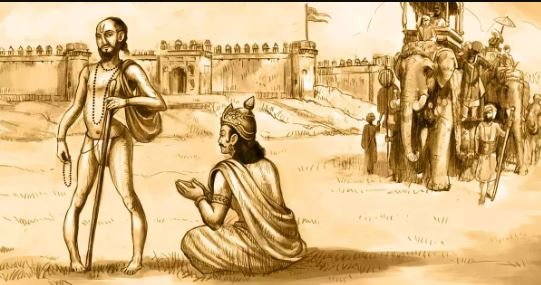
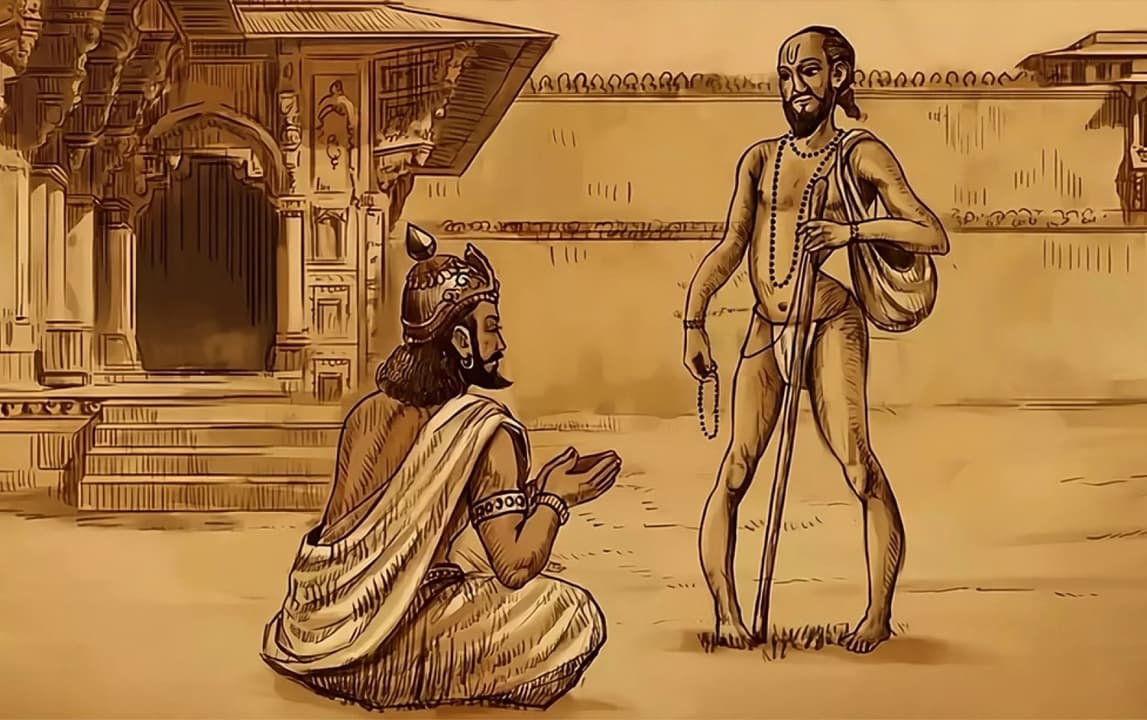
This chapter begins with King Janaka asking three massive questions: “How is knowledge attained? How is liberation (Mukti) reached? And how is dispassion (Vairagya) acquired?”
Ashtavakra’s answer is immediate and uncompromising:
- The Poison: He tells Janaka to shun the objects of the senses (pleasure, greed, etc.) like poison and seek forgiveness, sincerity, and truth like nectar.
- The Identity Shift: He says, “You are not the elements—earth, water, fire, or air. To be free, know yourself as the Witness ($Sakshi$) of these elements.”
- The Trap: He explains that your only “bondage” is that you see a “second” thing. In reality, you are the one pure consciousness in which the world appears like a reflection in a mirror.
Janaka asks for liberation. Ashtavakra does not hesitate. “If you desire freedom, abandon attachment to the unreal. Know yourself as pure awareness.” There is no preparation. No gradual purification. No moral ladder.
The teaching begins where most paths end.
Chapter 2: The Joy of Self-Realization
After hearing Chapter 1, King Janaka has an instant “Aha!” moment. In Chapter 2, it is the student (Janaka) who speaks, expressing his amazement at his own nature.
- The Infinite Self: Janaka says, “Amazing! I am stainless, serene, and beyond nature. All this time I have been fooled by the illusion of the world.”
- The Body is Nothing: He realizes that the body is just a tiny speck. He says, “Just as a wave, foam, and bubbles are not different from the water, the universe which has emanated from me is not different from me.”
- The Ocean Metaphor: He sees himself as the boundless ocean and the world as the waves. The waves come and go, but the ocean (His Awareness) neither increases nor decreases.
Chapter 3: The Test of Wisdom
In Chapter 3, Ashtavakra speaks again. He acts as a “Gatekeeper” to ensure Janaka isn’t just speaking fancy words, but actually living the truth. He challenges the King’s consistency.
- The Challenge: Ashtavakra asks, “If you truly know yourself as the eternal, one, and blissful soul, why are you still chasing wealth and pleasure? Why is there still ‘greed’ in your heart?”
- The Consistency Check: He argues that a person who has realized the Truth cannot be “attached” to anything. If you still feel “I want this” or “I hate that,” then your knowledge is only intellectual, not real.
- The Stance of the Wise: He describes the wise man as one who is neither surprised by the world nor disgusted by it. He stays like a spectator at a play.
More Deep Dive
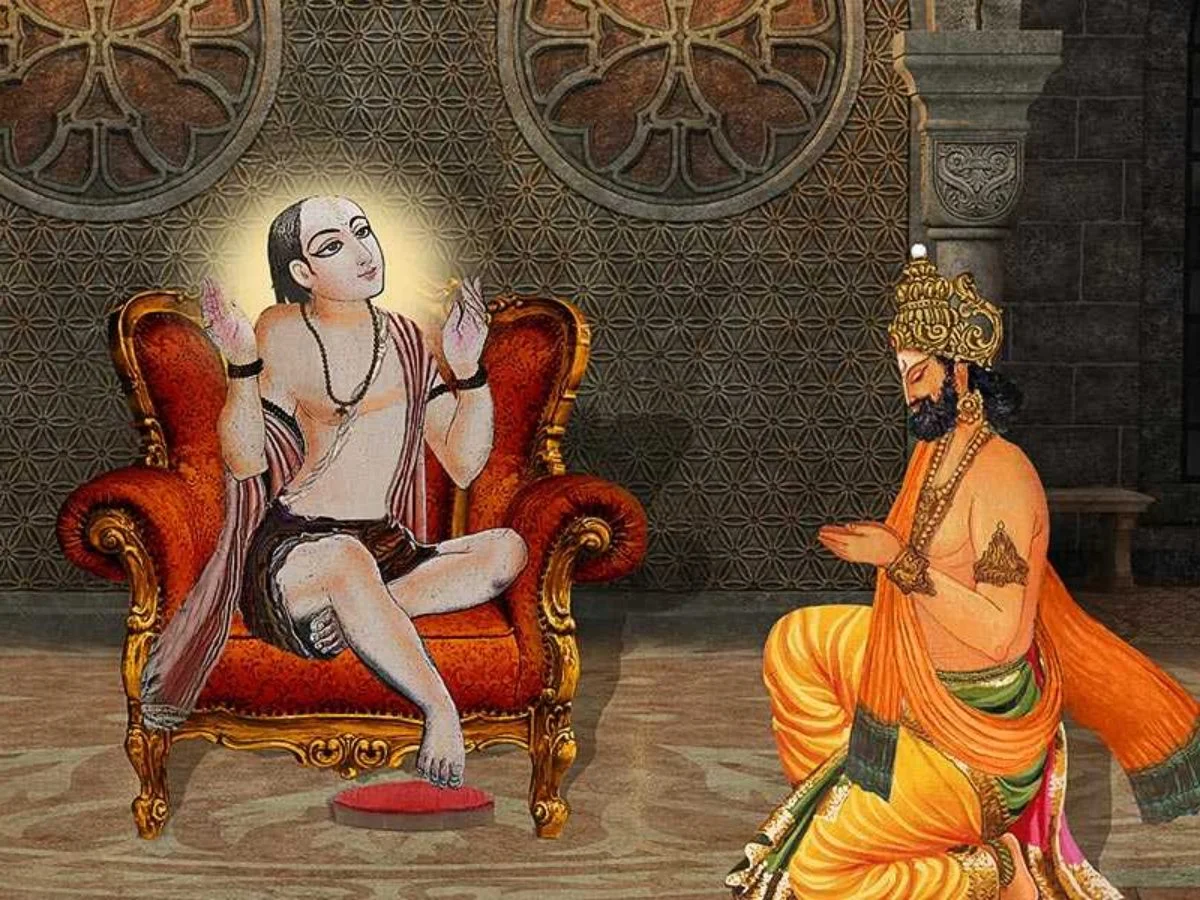
Janaka asks for liberation. Ashtavakra does not hesitate.
“If you desire freedom, abandon attachment to the unreal.
Know yourself as pure awareness.”
There is no preparation. No gradual purification. No moral ladder. The teaching begins where most paths end.
You Are Not the Body
Ashtavakra strikes first at the most basic identification. You think you are the body. But the body is seen. What is seen cannot be the seer. You notice pain. You notice pleasure. You notice aging. That which notices remains constant. If you are the observer of the body, you are not confined to it.This is not belief. It is direct examination.
You Are Not the Mind
Thoughts rise. Thoughts disappear. Moods fluctuate. Certainty turns into doubt. Yet something is aware of all these movements. That awareness does not change with each thought. It does not become angry when anger appears. It does not become fearful when fear appears. It simply knows. If you can observe your mind,
you are not your mind.
Bondage Is a Mistake
Ashtavakra does not say you are trapped. He says you are mistaken. Bondage is identification. You attach to body — you suffer bodily fear. You attach to mind — you suffer mental confusion. You attach to role — you suffer social insecurity. Remove the misidentification. What remains?
Freedom. Not acquired. Revealed.
You Are Already Free
This is the sharpest statement. You are not becoming free. You are free. Nothing needs to be added. Nothing needs to be purified. The sky does not need cleaning because clouds pass. Awareness does not need correction because thoughts appear. You suffer because you imagine limitation. See clearly — and the imagined boundary dissolves.
The Futility of Striving
Ashtavakra exposes spiritual ambition. You try to control the mind. You try to eliminate desire.
You try to perfect behavior. Who is trying? The doer. And that doer is part of the illusion. Effort strengthens identity. Recognition dissolves it. This does not promote laziness. It exposes false effort.
The Witness Alone Is Real
Remain as the witness. Watch thoughts without interference. Watch sensations without ownership. Watch emotions without labeling. The witness is not improved by discipline. It is recognized through detachment. You do not become the witness. You already are.
Detachment Without Withdrawal
Ashtavakra does not demand renunciation of the world.He demands renunciation of confusion.The world appears. Let it appear. The world changes.
Let it change. If you are not clinging, what binds you? Detachment is not indifference. It is clarity.
Silence After Recognition
When this is understood, effort drops. Not action — effort. Life continues.Body moves.
Mind thinks. But the centre shifts. From involvement to observation. From anxiety
to ease. Nothing dramatic.
Just simplicity.


