


Table of Contents
ToggleHey seekers,
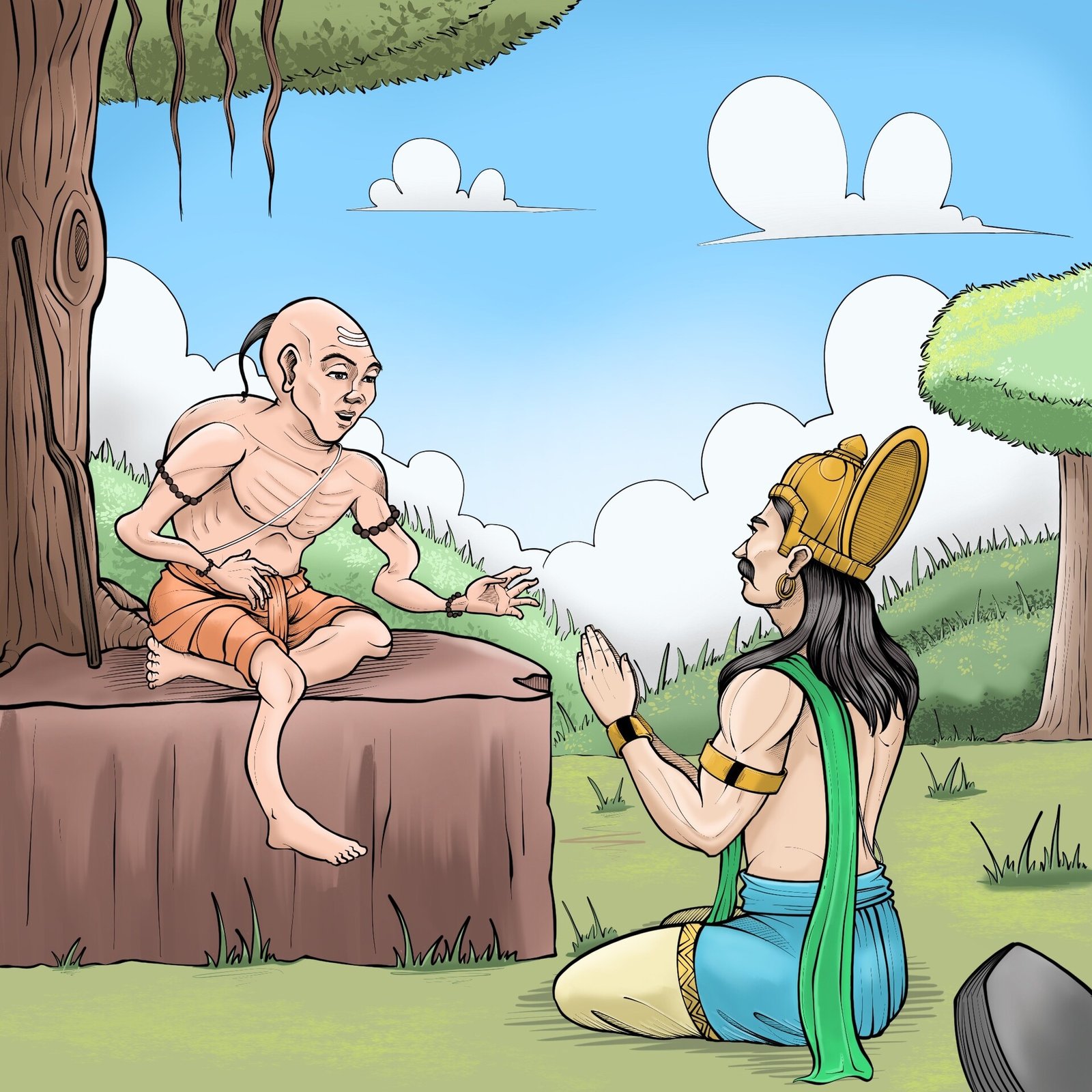
If you’ve followed our journey through the Ashtavakra Gita, you’ve experienced the “Stirrup Moment“—that radical idea that liberation isn’t something to achieve, but something you already are. King Janaka had that instantaneous breakthrough, realizing his true nature in a flash of insight.
But what happens after the “Aha!” moment? Life keeps happening, right? Doubts can creep in, old habits resurface, and the world still demands your attention. This is where the later chapters of the Ashtavakra Gita (Chapters 4-20) come in. They’re not about new teachings, but about deep learning – a powerful process to stabilize that initial, fleeting glimpse of truth into an unwavering, lived reality.
Think of it like this: if the “Stirrup Moment” was downloading a revolutionary new app onto your phone, these chapters are about integrating it seamlessly into your entire operating system, making it your new default.
From Flash Insight to Unwavering Truth: The “Deep Learning” Process
The Ashtavakra Gita has 20 chapters. After the initial “shock” and instantaneous realization in the first few, the remaining chapters are a systematic, almost psychological, process to ensure the truth of “You are pure, unbound Consciousness” becomes absolute and undeniable.
Here’s how these chapters work like a “deep learning” framework for your mind:
-
Iterative Affirmation (Chapters 4-6: Solidifying the Direct Insight):
- What it does: These chapters are like repeatedly affirming the core truth from slightly different angles. Janaka, now fully realized, overflows with joy and praises the Self. He sees himself as a boundless ocean where the “waves” of the world arise and subside.
- For you: This is about celebrating your initial insight. Every time you consciously recognize your awareness, your presence, separate from thoughts or emotions, you’re “re-training” your mind. It’s not just a thought; it’s a direct, emotional integration of this freedom. You realize the “individual self” with its fears and limitations is just a temporary projection.
-
Error Correction (Chapters 7-12: Deconstructing the Illusions):
- What it does: Ashtavakra systematically dismantles every subtle way the mind tries to cling to false identities. He points out that bondage is just the mind’s attachment to “I” and “mine” – to desires, to outcomes, to the idea of being a “doer.”
- For you: This is where you bravely identify and let go of what isn’t you. You might find yourself saying, “This anger isn’t me; it’s just an emotion arising.” Or, “This desire isn’t defining my completeness.” It’s about recognizing that trying to control external things or even suppress thoughts is futile; true tranquility comes from letting go of the ownership of them. You move towards true dispassion (Vairagya), seeing the world not as something to gain from, but as a fascinating play of consciousness.
-
Generalization to All Experience (Chapters 13-20: The Ultimate Dissolution):
- What it does: These final chapters show how to live this truth in every aspect of life. Janaka realizes there is no longer any “world,” “body,” or “mind” separate from the Self. He lives in pure bliss and equanimity, untouched by praise or blame, acting spontaneously without ego.
- For you: This is about seamlessly integrating your inherent freedom into your daily actions, relationships, and perceptions. It’s no longer a concept you think about; it’s how you live. You realize that the “Self is always still and free, even amidst the greatest activity.” You become the
jivanmukta– one who is liberated while living, treating all experiences as a spontaneous play, free from effort or attachment.
The Power of Relentless Affirmation
The later chapters of the Ashtavakra Gita are not introducing new concepts; they are providing relentless, varied, and profound perspectives to stabilize the initial insight. Each chapter is like a new “training epoch” where the core truth is presented from a slightly different angle, systematically dismantling mental errors (attachment, ego, desire, doership).
It strips away all layers of illusion until nothing remains but the unconditioned, timeless, effortless truth of “I am That.” This “deep learning” process leads to an irreversible, stable state of realization.
Your Journey Continues…

You are pure awareness
The Ashtavakra Gita doesn’t ask you to climb a ladder; it asks you to recognize that you’re already at the top. These “deep learning” chapters serve as a powerful guide to help you stay there.
Your journey of self-discovery isn’t just about the initial spark of “immediate freedom”; it’s about courageously living that freedom every single moment, dissolving confusion, and revealing the boundless consciousness you truly are.
Are you ready to commit to this deep learning, to let the truth permeate every part of your being, until your instant freedom becomes your unwavering reality?
- Key Affirmation: “I am pure bliss, eternally free from sorrow. The mind, senses, and body are not me.”
- Psychology: Reinforces the inherent bliss (sukham) of the Self, which is not dependent on external circumstances but is its intrinsic nature.
Chapter 14: The Nature of Equanimity (Samata)
- Deep Learning Insight: Ashtavakra emphasizes seeing the Self everywhere, without distinction. This leads to perfect equanimity, where there is no difference between praise and blame, honor and dishonor.
- Key Affirmation: “The wise one sees no difference between a king and a beggar, for all are manifestations of the Self.”
- Psychology: This chapter deepens the understanding of psychological equanimity (samata) as a natural outcome of non-duality, dissolving the reactive mind.

Chapter 15: The Knowledge of the True Self (Tattva-Jnana)
- Deep Learning Insight: Janaka declares that for him, there is no longer any world, body, or mind. All is the Self. He is pure, unconditioned awareness.
- Key Affirmation: “For me, there is no earth, no water, no fire, no air, no ether. All is the Self, and I am that Self.”
- Psychology: This represents the complete internalization of the Advaitic truth, where the world is no longer perceived as truly separate from the Self.

Chapter 16: The Stillness of the Self (Nirvana)
- Deep Learning Insight: Ashtavakra points out that the Self is always still and free, even amidst the greatest activity. The world is just a play of consciousness.
- Key Affirmation: “The Self is always still, tranquil, and free. It is neither bound nor liberated.”
- Psychology: This chapter emphasizes the inherent stillness (nirvana) of the Self, which is untouched by any external event or internal thought.

Chapter 17: The State of the Jivanmukta (The Awakened One)
- Deep Learning Insight: Ashtavakra describes the conduct of the liberated one who acts spontaneously, without ego, and without attachment, treating all experiences as play.
- Key Affirmation: “The awakened one acts without agency, speaks without purpose, and lives without effort.”
- Psychology: This provides a description of the practical living of a jivanmukta, highlighting the natural spontaneity and freedom from conventional social constraints that arise from complete liberation.

Chapter 18: The Non-Doer (Akarta)
- Deep Learning Insight: Janaka confirms that he is not the doer of any action. All actions happen through him, but he remains the untouched witness.
- Key Affirmation: “I am not the doer. All actions happen in my presence, but I am untouched by them.”
- Psychology: This chapter is a crucial one, reaffirming the complete dissolution of the individual ego’s sense of doership, which is a significant source of karma and bondage.

Chapter 19: The Glory of the Self-Realized (Mahima)
- Deep Learning Insight: Ashtavakra reiterates the supreme glory of the Self-realized one, who is free from all pairs of opposites and rests in eternal bliss.
- Key Affirmation: “The Self-realized one is beyond all dualities, beyond virtue and vice, beyond joy and sorrow.”
- Psychology: This celebrates the ultimate, transcendent state of the realized being, who is beyond all conventional human experience and suffering.

Chapter 20: The Ultimate Absorption (Samadhi)
- Deep Learning Insight: This final chapter is a reiteration of the entire teaching in its most distilled form, dissolving even the concepts of “knowledge” and “ignorance.” The Self is all that is.
- Key Affirmation: “The Self is pure, boundless, tranquil consciousness. There is nothing else.”
- Psychology: This is the final and most complete absorption (samadhi) into the non-dual reality, where no distinction remains, not even between the knower, the known, and the act of knowing.

“Deep Learning” Summary for Chapters 4-20:
The remaining chapters of the Ashtavakra Gita don’t introduce new concepts as much as they provide relentless, varied, and profound perspectives to stabilize the initial insight. They act like a highly optimized neural network consistently re-training on the same fundamental truth, “You are pure, unbound Consciousness.”
- Iterative Affirmation: Each chapter is like a new “training epoch” where the core truth is presented from a slightly different angle, dismantling specific mental errors (attachment, ego, desire, doership).
- Error Correction (Dismantling Misidentification): Ashtavakra systematically identifies and dismantles every possible subtle identification the mind might cling to – from the gross body to the subtle intellect, and even to the idea of being a “seeker” or “liberated.”
- Generalization to All Experience: Janaka’s responses show the “model” learning to generalize the insight to all aspects of life – desires, actions, relationships, perceptions, and even the concept of liberation itself.
- Ultimate Convergence: The text progressively strips away all layers of illusion until nothing remains but the unconditioned, timeless, effortless truth of “I am That.” The “deep learning” process leads to an irreversible, stable state of realization.
The Ashtavakra Gita is not a progressive climb, but a direct pointing. The repetition and varied phrasing in the later chapters serve as powerful psychological tools to ensure that the initial, fleeting glimpse of truth becomes a permanent, unwavering realization, leaving no room for doubt or lingering identification with the illusory self.
