


Table of Contents
ToggleHey Warriors! Ever Faced a Challenge So Big, You Just Wanted to Quit?
We’ve explored so many paths to inner peace, from the quiet of Zen to the flow of the Tao. But what happens when you’re standing right in the middle of a “battlefield” in your own life – maybe it’s huge exams, a massive life decision, or a conflict that feels impossible – and your mind just goes into total meltdown?
You feel overwhelmed. Confused. Your heart hurts, and every part of you just wants to drop your weapons and run away.
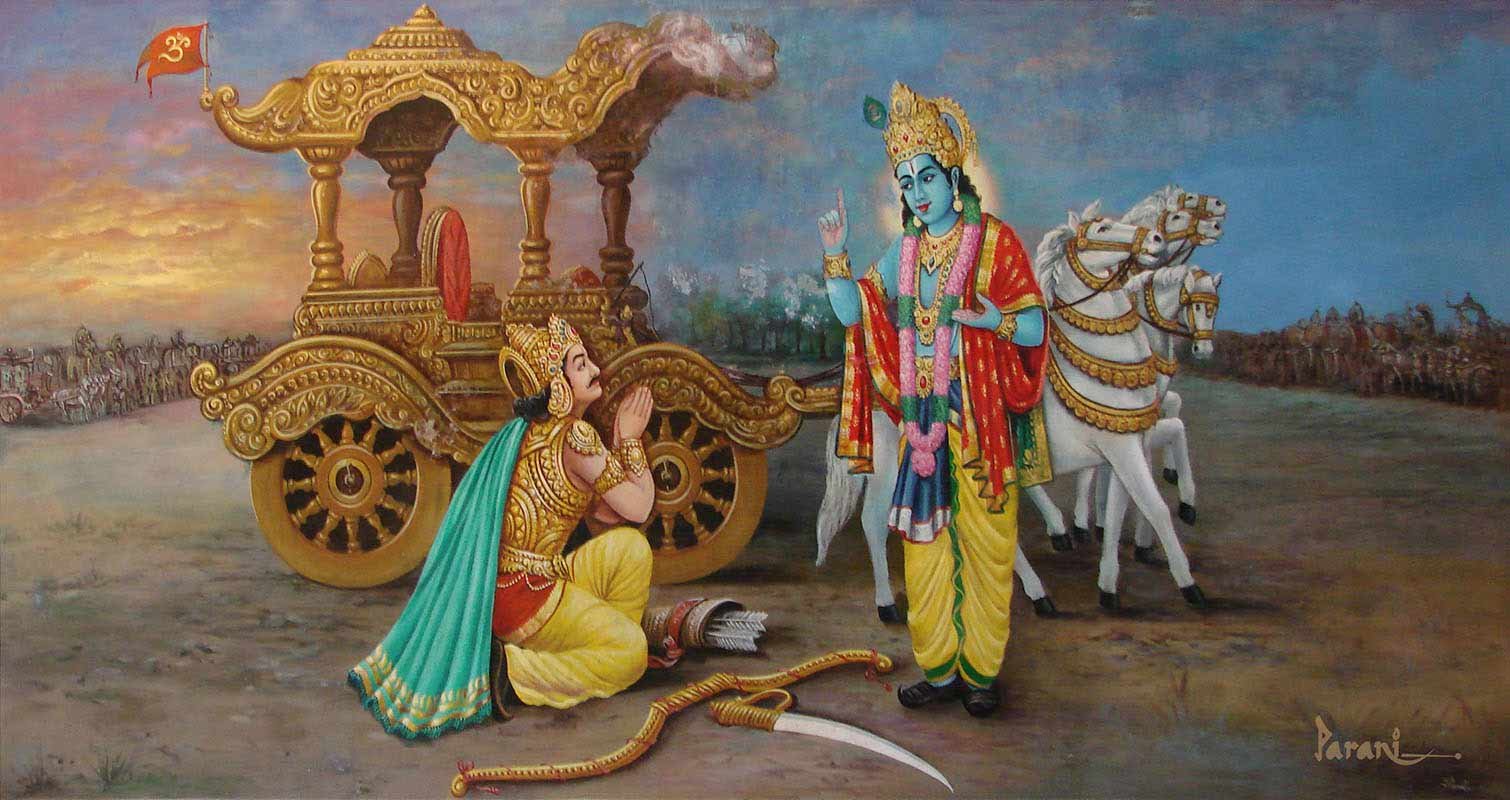
This exact feeling is where one of the world’s most beloved spiritual texts, the Bhagavad Gita, begins. It’s a conversation between a great warrior named Arjuna (who is having this epic meltdown) and his guide, Krishna (who is basically the universe’s ultimate wisdom in disguise).
Arjuna’s Meltdown: “I Can’t Do This!”

Arjun melted, I can't Do this
Imagine Arjuna. He’s a hero, a skilled warrior, and he’s on the brink of the biggest battle of his life. But when he looks at the opposing army, he sees his own family, his teachers, his friends. His heart sinks.
He says to Krishna, “I can’t fight them. My whole body is trembling. My mind is reeling. I don’t see any good coming from this. I’d rather give up and live a simple life than do this!”
Have you ever felt that? That feeling of “This is too much, I quit!”? That’s Arjuna’s Despondency. And Krishna’s answer is what makes this chapter, Sankhya Yoga, so powerful.
Krishna’s Mind-Blowing Pep Talk: You Are Not Who You Think You Are!

Krishna doesn’t just say, “Toughen up, dude!” He drops some of the most profound wisdom ever, completely reframing how Arjuna sees himself and the world.
1. You Are Not Just Your Body (You’re Way More Eternal!)
Krishna tells Arjuna that what he’s grieving for are just bodies, which are temporary. The true Self – the soul or Atman – is never born and never dies.
“Just as a person casts off worn-out garments and puts on new ones, so does the soul cast off worn-out bodies and enter into others that are new.”
Think of it like a gamer and their avatar, or you changing your clothes. The clothes get old, you change them. The avatar might get defeated, but you, the player, are still there. You are the eternal awareness that is experiencing this life, in this body. This connects directly to that inner observer we explored in our “Who Am I, Really?” Your Epic Chat with Your Inner Self!
2. Do Your Duty, But Let Go of the Score (The Secret of Karma Yoga!)
Krishna then gives Arjuna a game-changing piece of advice:
“You have a right to perform your prescribed duties, but you are not entitled to the fruits of your actions. Never consider yourself to be the cause of the results of your activities, and never be attached to not doing your duty.”
This is the heart of Karma Yoga. It means: Focus on giving your 100% to the action itself, because it’s the right thing to do (your Dharma or duty), but let go of your obsession with the outcome!
Think about studying for an exam. Your duty is to study with full focus. But obsessing over “Will I get an A? What if I fail?” creates anxiety. Do your best, and then let go. Play the sport with all your heart, but don’t let your happiness be completely dependent on whether you win or lose.
3. Ride the Waves: Pleasure and Pain Come and Go
Krishna reminds Arjuna that things like happiness and distress, heat and cold, are temporary. They appear and disappear like seasons.
“The nonpermanent appearance of happiness and distress, and their disappearance in due course, are like the appearance and disappearance of winter and summer seasons. They arise from sense perception, and one must learn to tolerate them without being disturbed.”
This is so similar to Buddha’s teaching on Seeing Without Clinging. When we learn to endure these waves without being totally thrown off balance, we find a deep and powerful steadiness.

Chillness in the eyes of Shri Krishna for inner burnt of Arjuna
The Ultimate Goal: The Mind of “Unshakeable Chill” (Sthitaprajna)
Arjuna, amazed, asks Krishna: “What does a person with this kind of steady wisdom even look like? How do they talk? How do they sit? How do they walk?”
Krishna’s description of this person, the Sthitaprajna, is the ultimate goal. It’s someone who has achieved a state of ultimate chill, a profound inner stillness:
- They’ve given up all the selfish cravings of the mind.
- Their mind isn’t shaken by misery, nor do they get carried away by happiness. They are free from attachment, fear, and anger.
- They can withdraw their senses from the world’s distractions, just like a tortoise pulling its limbs into its shell for protection.
- They are like the ocean: rivers constantly flow into it, but the ocean remains undisturbed and calm. In the same way, desires flow into this person’s mind, but they remain steady and at peace.
This isn’t about being emotionless! It’s about being so anchored in your true Self that the chaos of the world can’t knock you over. It’s the ultimate state of “being present” that we explored in Zen: Direct Seeing Without Concept.
From Despair to Your True Self
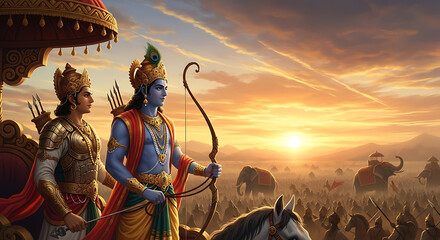
The second chapter of the Bhagavad Gita is a complete journey. It takes us from Arjuna’s rock-bottom moment of despair and shows us the path to unshakeable inner steadiness. It teaches that by understanding our eternal nature and by acting with selfless purpose, we can navigate any battlefield in life with clarity, courage, and profound peace.
For More Exploration:
- Read the Bhagavad Gita: Find a good translation for young readers, like the one by Eknath Easwaran, which is known for its clarity.
- The Concept of Self: For more on the eternal Self vs. the temporary self, explore the ideas in our post on The Inner Turn — From Question to Silence.
