


The Vedas — The Dawn of Sacred Inquiry
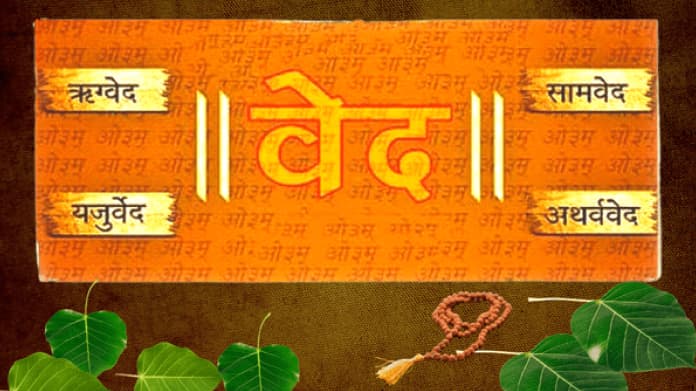
The Vedas represent the earliest layer of Indian spiritual and philosophical reflection, forming the foundation upon which later systems like the Upanishads, Sāṃkhya, and Buddhism emerged. Composed in archaic Sanskrit and transmitted orally for centuries, the Vedas are not merely ritual manuals but poetic expressions of humanity’s first sustained encounter with cosmic mystery. They contain hymns to natural forces — fire, wind, dawn, sky — yet these deities are not simple personifications of nature; they symbolize deeper principles of order, rhythm, and interconnectedness. Within the Vedic worldview, the universe is sustained by Ṛta, a cosmic order that harmonizes natural law and moral truth. The Vedas thus mark the beginning of systematic sacred inquiry in the East — a movement from reverence toward reflection, from ritual toward metaphysical questioning. In their hymns, one already senses the stirring of philosophy: the search for unity behind multiplicity and the intuition that the visible world rests upon a deeper, unseen reality.
“Tat Tvam Asi” — The Identity of Self and Absolute
The Question Behind All Questions
Indian philosophy begins with a more intimate inquiry:
Who am I?
The profound answer offered by the Upanishads is both simple and revolutionary:
Atman is Brahman.
The Self within is identical with the ultimate reality of the cosmos.
- This is not theology.
It is metaphysical realization. - If Plato sought eternal Forms beyond the world,
the Upanishads declare:
The eternal is within.
1. What Are the Upanishads?

The Upanishads are the philosophical culmination of the Vedic tradition.
The word “Upanishad” means:
- Sitting near (a teacher)
- Receiving secret wisdom
- Inner instruction
They are not systematic treatises. They are dialogues, reflections, revelations.
They ask:
- What is the ground of existence?
- What remains when everything changes?
- What survives death?
Their answer unfolds gradually.
2. Brahman — The Absolute Reality
In the Upanishadic vision, Brahman is the ultimate, unconditioned reality — the infinite ground from which all existence arises and into which it ultimately resolves. Brahman is not a deity confined to form, personality, or location; it is the very essence of being itself. It is described as eternal, limitless, and beyond all attributes, yet it is also the source of every attribute that appears in the world. The sages speak of Brahman in paradox: it is smaller than the smallest and greater than the greatest, beyond thought and speech, yet intimately present in every experience.
Brahman is not an object among other objects; it is the underlying reality that makes all objects possible. Just as waves arise from the ocean without being separate from it, all forms and phenomena arise from Brahman without diminishing its unity. The Upanishads ultimately declare that this absolute reality is not distant or external — it is identical with the innermost Self (Ātman). To realize Brahman is not to acquire something new but to awaken to the fundamental truth that existence, consciousness, and fullness are one indivisible reality.
The Upanishads describe Brahman as:
- Infinite
- Eternal
- Beyond name and form
- The source of all existence
It is not a personal deity in the ordinary sense.
- It is pure being.
- Pure consciousness.
- Pure fullness.
Brahman is described paradoxically:
- Smaller than the smallest
- Greater than the greatest
- Beyond speech
- Beyond thought
This echoes the Nasadiya Sukta’s reverence for mystery. But now the insight becomes more defined:
There is an ultimate unity behind multiplicity.
3. Atman — The Inner Self
Ātman — The Inner Self
Ātman, in the Upanishadic tradition, refers to the innermost Self — the core of one’s being that remains constant amidst the changing flow of body, mind, and experience. It is not the ego, personality, or social identity, all of which shift over time. Rather, Ātman is the silent witness, the pure awareness that observes thoughts, emotions, sensations, and actions without itself being altered by them. When you say “I am,” before adding any description — that simple sense of presence points toward Ātman.
The sages guide seekers through a process of negation — neti, neti (“not this, not this”) — to discern the Self from what is transient. The body changes, so it cannot be the ultimate Self. Thoughts arise and pass, so they too are not the final identity. What remains is the witnessing consciousness that illumines all experience. This Ātman is described as unborn, undying, beyond fear and decay. In its deepest realization, the Upanishads proclaim that Ātman is not separate from Brahman, the absolute reality. Thus, discovering the inner Self is simultaneously discovering the universal ground of existence.
While Brahman is the cosmic principle,
Atman is the inner Self.
- Not the ego.
Not personality.
Not body.
Not thought.
Atman is the witnessing consciousness. The silent awareness behind experience.The Upanishadic sages guide the seeker through negation:
“Neti, Neti” — Not this, not this.
You are not:
- The body
- The senses
- The emotions
- The thoughts
When all these are set aside, what remains?
Pure awareness.
That is Atman.

4. The Mahavakya — Tat Tvam Asi
Tat Tvam Asi — Thou Art That.
Found in the Chandogya Upanishad, this teaching occurs in a dialogue between teacher and student.
It means:
- The essence of the universe (That)
is identical with the essence within you (Thou). - This is not metaphor.
- It is ontological identity.
The individual self and the universal Self are one.
5. The Analogy of the Ocean
The Upanishads often use analogies:
- Rivers merging into the ocean
- Sparks emerging from fire
- Space within a pot and space outside
The pot-space appears separate.
- But when the pot breaks, space remains indivisible.
- Similarly:
- Individual consciousness appears separate.
- But in realization, unity becomes evident.
- This aligns beautifully with your reflection:
- Consciousness is not fragmented — it is field-like.

6. Being and Becoming Reconciled
The tension between Being and Becoming is one of the most enduring questions in philosophy. Being refers to what is unchanging, eternal, and foundational — the stable ground of existence. Becoming refers to change, movement, growth, and transformation — the dynamic flow of experience. In Western thought, this tension appears clearly between Heraclitus, who emphasized flux, and Plato, who sought eternal Forms beyond change.
Indian philosophy addresses this polarity in its own way. The Upanishads identify ultimate Being with Brahman — the unchanging absolute reality — while acknowledging that the world of experience is a realm of becoming, marked by birth, decay, and transformation. Buddhism, on the other hand, highlights becoming through impermanence, yet points toward a freedom that is not bound by clinging to change.
The insight that emerges across traditions is that Being and Becoming are not necessarily enemies. Becoming unfolds within Being, just as waves arise within the ocean. Change occurs, yet something deeper sustains it. Recognizing this relationship allows one to engage fully with life’s movement while remaining anchored in a deeper stability. Thus, Being provides the silent ground, and Becoming expresses its dynamic creativity.
Recall the Western tension:
- Heraclitus — flux
Plato — eternal Forms
The Upanishads reconcile this elegantly.
- The world of change (becoming) is real at one level.
- But underlying it is unchanging awareness (being).
- Movement occurs within stillness.
The dance happens within silence.
Nataraja dances —
but awareness remains.
7. The Problem of Ignorance (Avidya)
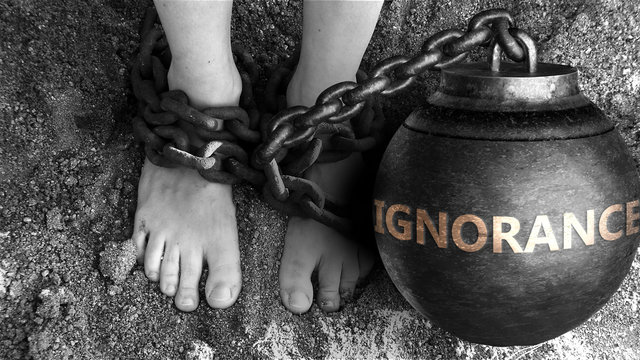
In Indian philosophy, Avidyā — ignorance — is not merely a lack of information but a fundamental misperception of reality. It is the confusion that causes us to mistake the transient for the eternal, the changing for the unchanging, and the ego for the true Self. According to the Upanishadic and Vedantic traditions, the deepest ignorance lies in identifying with body, mind, and personal history while overlooking the witnessing consciousness that underlies them. This misidentification creates a sense of separation — “I” versus “world” — which becomes the root of fear, attachment, and suffering.
Avidyā does not mean darkness imposed from outside; it is a veiling of clarity. Just as clouds obscure the sun without extinguishing it, ignorance obscures awareness without destroying it. The problem is not that truth is absent, but that perception is distorted. Liberation (Moksha) therefore is not the creation of something new; it is the removal of ignorance. When misunderstanding dissolves, reality is recognized as it always was — unified, luminous, and whole.
If Atman is Brahman, why do we experience separation? The Upanishads identify the cause as Avidya — ignorance. Ignorance is not lack of information. It is misidentification. We mistake the transient for the eternal. We identify with body and mind instead of pure awareness.This parallels Plato’s cave.Shadows are mistaken for reality.

8 Liberation (Moksha)
“Inner Epilogue — The Sky of Consciousness.”
9. Consciousness as Fundamental Reality
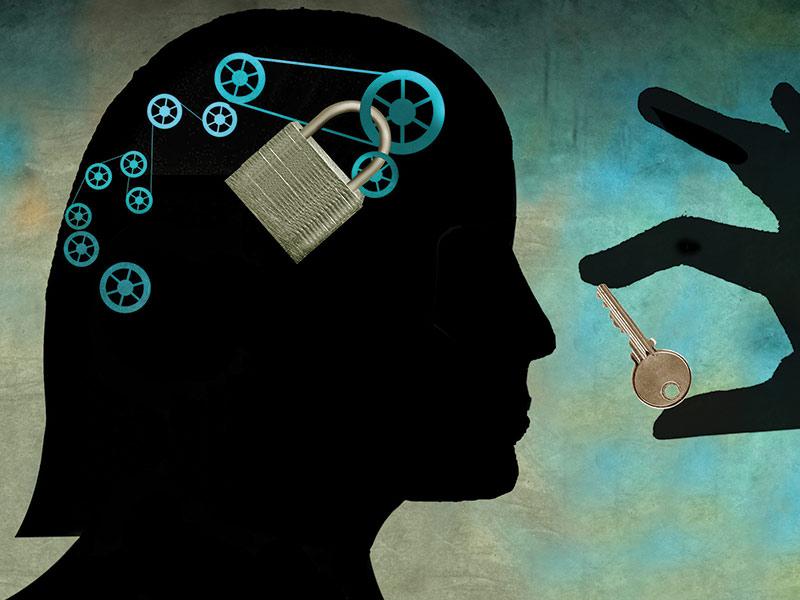
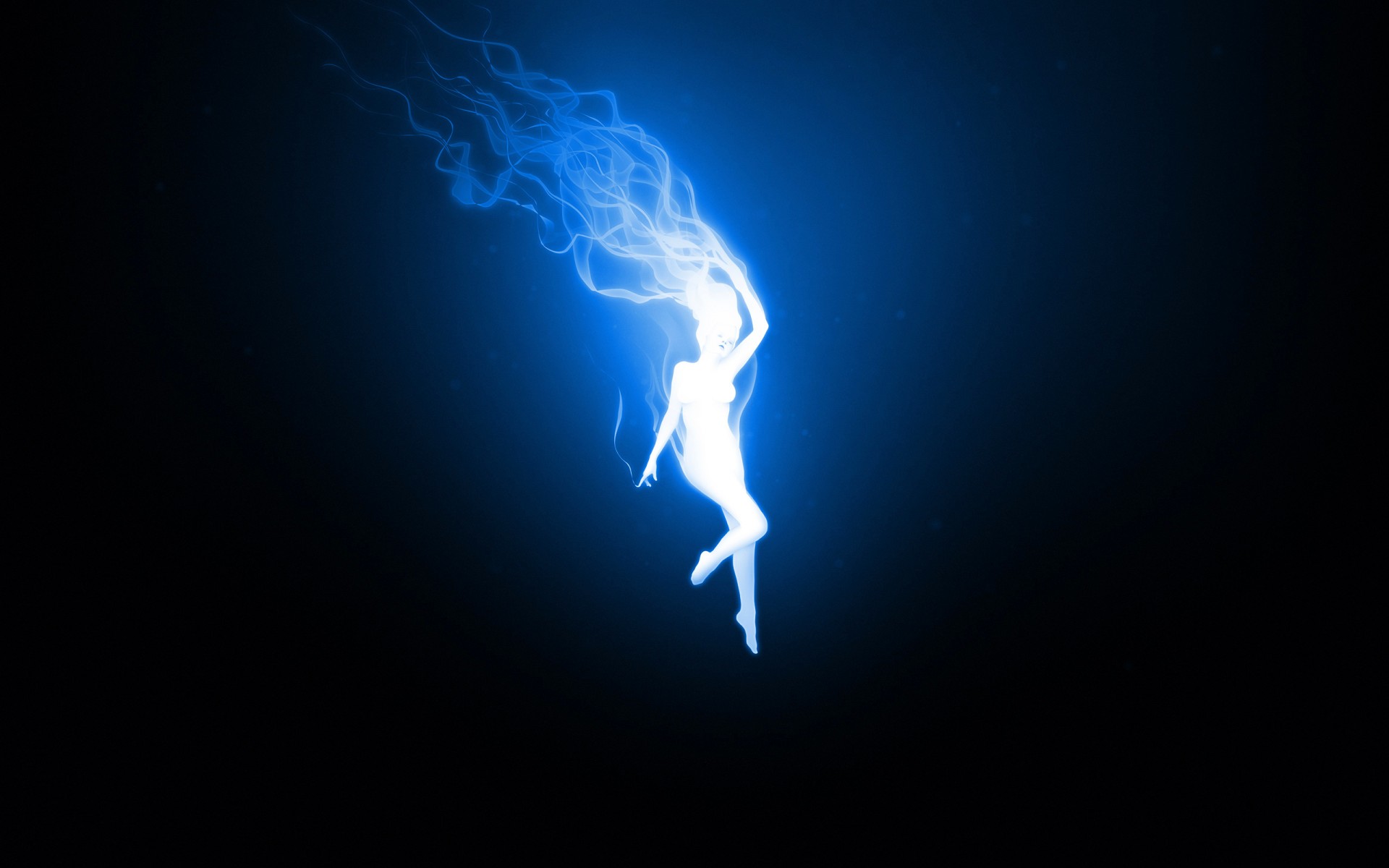
The idea that consciousness is fundamental reality stands at the heart of many Indian philosophical traditions. Rather than viewing consciousness as a byproduct of matter, these systems propose that consciousness is the ground from which matter and experience arise. In the Upanishadic view, Brahman — the absolute reality — is described as Sat-Chit-Ananda (Being–Consciousness–Bliss), suggesting that awareness is not secondary but intrinsic to existence itself. The world of forms, thoughts, and sensations appears within consciousness, much like images appear on a screen, yet the screen remains unchanged.
This perspective reverses the common materialist assumption that mind emerges from physical processes. Instead, it posits that what we call “matter” is known only within awareness, and therefore cannot be prior to it in experience. Consciousness becomes the condition for all knowledge, perception, and meaning. Recognizing consciousness as fundamental shifts the philosophical inquiry from “How does matter produce mind?” to “How does consciousness express itself as world?” In this view, awareness is not an isolated function within the universe; it is the luminous field in which the universe is revealed.
Modern philosophy debates: Is consciousness produced by matter? Or is matter an appearance within consciousness? The Upanishads boldly affirm: Consciousness is primary. Matter is manifestation. This radical view is gaining renewed interest in contemporary discussions on consciousness studies.
The Upanishadic seers intuited this millennia ago.
10. Ethical Implications
If consciousness is fundamental and shared at the deepest level of reality, then ethics is no longer merely a social contract or imposed rule — it becomes a natural expression of insight. In the Upanishadic view, if the same Ātman dwells in all beings, harming another is, in a profound sense, harming oneself. Compassion arises not from obligation but from recognition of unity. When separation is seen as partial appearance rather than ultimate truth, empathy becomes rational and spontaneous.
Similarly, in Buddhist philosophy, understanding impermanence and interdependence dissolves rigid self-centeredness. When the illusion of a fixed, isolated self weakens, concern for others naturally strengthens. Suffering is understood as a shared human condition, and ethical conduct becomes the practical extension of wisdom.
Thus, metaphysical insight shapes moral life. Ethics is not detached from philosophy; it flows from it. When awareness deepens, responsibility expands. The realization of interconnectedness transforms behavior from self-preservation to mindful participation in a larger whole. In this way, ethical living becomes not a constraint but a reflection of awakened understanding.
If all beings share the same Atman: Compassion becomes natural. Violence toward another becomes ignorance. Unity is not moral command —it is metaphysical fact. This transforms ethics from obligation to recognition.
11. Experiential Verification
The Upanishads are not speculative philosophy alone. They emphasize meditation, inquiry, and introspection. Truth must be realized, not merely believed. The journey is inward. Silence becomes teacher.In silence, the distinction between knower and known dissolves.
12. Conclusion — The Sky Within
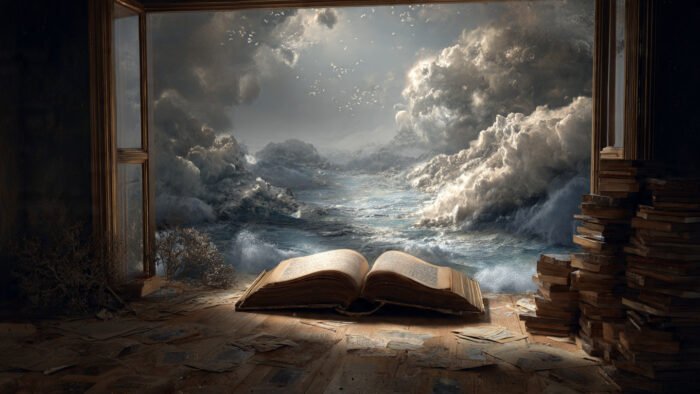
“The Sky Within” is a metaphor for the vast, open nature of consciousness. Just as the outer sky contains clouds, storms, sunlight, and passing birds without being altered by them, inner awareness contains thoughts, emotions, memories, and sensations without itself being disturbed. Clouds may gather and disperse, yet the sky remains spacious and untouched. Similarly, experiences arise and fade within the field of awareness, but the witnessing presence remains clear and constant.
This image captures a central insight of Indian philosophy: our true nature is not the shifting content of the mind but the luminous space in which that content appears. When we identify only with passing mental events, we feel confined and reactive. When we recognize the “sky-like” quality of awareness, a deeper freedom becomes possible. Disturbances may still arise, yet they no longer define us. The sky does not resist the clouds; it allows them. In the same way, inner stillness does not suppress experience but holds it gently.
To discover the sky within is to rediscover a dimension of being that is open, unbounded, and quietly present — the silent backdrop against which the drama of life unfolds.
The Upanishadic vision stands as one of humanity’s deepest metaphysical insights.
It declares:
Behind change — awareness.
Behind multiplicity — unity.
Behind fear — immortality.
Heraclitus gave us flux.
Plato gave us eternal Forms.
Kant gave us the structure of knowing.
The Upanishads give us identity with the Absolute.
Tat Tvam Asi.
You are not merely a part of the universe. You are the universe aware of itself.And in that recognition,
the river of becoming finds its silent source.
