



Table of Contents
ToggleIntroduction : Indian Phillosophy unlocked
Hey deep thinkers and cosmic explorers! Ever wonder about the BIG questions? Like, “Why are we here?” or “What is real?” Long before iPhones or even written history, people in ancient India were asking these very questions, and they came up with some mind-blowing answers! Go ahead to Indian Phillosophy unlocked.
Forget boring old textbooks – Indian Philosophy isn’t just a dry, dusty subject. It’s like a vibrant, colorful tapestry woven with diverse ideas, super smart logic, and deep insights gained from meditation. It’s not just about thinking; it’s a holistic quest to understand reality, what it means to be human, and how to find true freedom! While Western philosophy sometimes keeps religion separate, in India, philosophy and spiritual practice were always deeply intertwined, meaning abstract theories often led directly to practical ways of living.
Get ready to unveil how ancient minds grappled with universal questions, offering timeless wisdom that still rocks our world today! This is your guide to Indian Philosophy Unlocked!
Ancient Roots, Modern Relevance: The Forever Quest for Truth!
The journey of Indian Philosophy Unlocked stretches back over three thousand years, starting primarily with the Vedas – the oldest sacred texts of Hinduism. These ancient scriptures asked foundational questions about cosmic order (Rita), the nature of the divine, the endless cycle of birth and death (samsara), and the concept of karma.
But Indian Philosophy quickly grew beyond just interpreting scriptures! It developed super sophisticated systems of logic, epistemology (the science of knowing what you know!), metaphysics (the study of what’s fundamentally real), ethics, and psychology. At its heart, a core goal across many schools is the pursuit of moksha, or liberation from suffering and the cycle of rebirth, achieved through self-realization and understanding. This quest often involves serious self-discipline, meditation, and a super sharp analytical approach to understanding perception, consciousness, and the self.
Diving into the Six Schools of Indian Philosophy!

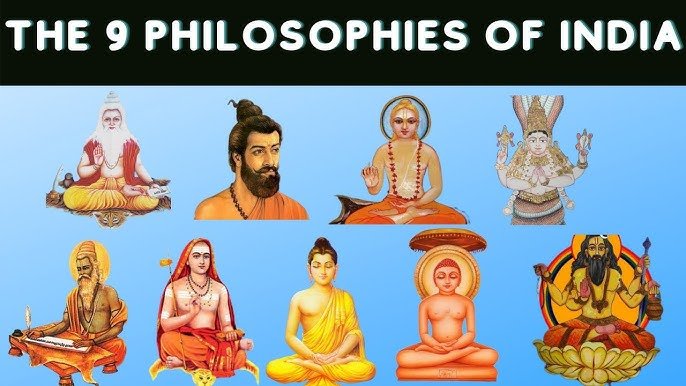
The vast world of Indian Philosophy is broadly divided into two main categories: Orthodox (Āstika) and Heterodox (Nāstika). The Orthodox schools are awesome because they accept the Vedas as a valid source of knowledge. Each school created unique ways of thinking, but they always engaged in vibrant debates and shared ideas!
- Nyaya (Logic & How We Know Things): The Science of Being Super Smart!
Nyaya is famous for its systematic development of logic. It meticulously details how we get valid knowledge (pramanas), like seeing things (perception), figuring things out (inference), comparing stuff (comparison), and trusting what wise people say (verbal testimony). Nyaya thinkers were like the ultimate pioneers in formal logic, setting up rigorous frameworks for argument and debate. It was a foundational subject for all other philosophical studies! - Vaisheshika (Atoms & What’s Real): Deconstructing Reality to Its Tiny Bits!
Often paired with Nyaya, Vaisheshika dove into the nature of reality through its atomistic and pluralistic metaphysics. It proposed that the universe is made of super tiny, eternal atoms (anu) and categorized all knowable objects and experiences into six basic categories (substance, quality, action, generality, particularity, and inherence). This school tried to explain the material world in a systematic, almost scientific, way! - Samkhya (Consciousness & Matter): The Cosmic Dance of Mind and Stuff!
Samkhya is one of the oldest and most influential schools. It proposes a radical dualism between two ultimate realities: Purusha (pure consciousness or self) and Prakriti (primordial matter or nature). It describes how the universe evolves from Prakriti into twenty-four constituent principles, including intellect, ego, mind, and the senses. Samkhya offers a detailed cosmology (how the universe began) and psychology, emphasizing the difference between passive, witnessing consciousness and the active, evolving material world. - Yoga (Practical Philosophy for Freedom): The Path to Union!
Super connected with Samkhya, the Yoga school – especially as written by Patanjali in the Yoga Sutras – is a practical philosophy focused on achieving liberation through mental discipline and meditation. It outlines an eight-limbed path (Ashtanga Yoga) that includes ethical rules, physical postures, breath control, and deep meditation. Yoga aims to calm the mind, allowing the Purusha (consciousness) to realize its true, independent nature. It’s more than just stretching; it’s a whole life philosophy! - Purva Mimamsa (Vedic Rituals): The Power of Doing Things Right!
This school mostly focused on correctly interpreting and applying the Vedas, especially their instructions about rituals and duty (dharma). It emphasized the importance of performing Vedic rituals precisely, believing that such actions lead to desired outcomes and uphold cosmic order. They developed super sophisticated principles of hermeneutics (how to interpret texts) to figure out the exact meaning of Vedic commands. - Vedanta (The Ultimate Reality): The Grand Finale of Wisdom!
Vedanta, meaning “the end or culmination of the Vedas,” is probably the most famous and influential school of Indian Philosophy. It gets its insights from the Upanishads, the philosophical sections of the Vedas. Vedanta explores the nature of Brahman (the ultimate reality or Absolute Truth) and its relationship to Atman (the individual soul or self). Within Vedanta, several cool sub-schools emerged, like Advaita Vedanta (non-dualism, saying Atman and Brahman are one), Vishishtadvaita (qualified unity), and Dvaita (dualism, saying they’re separate). Vedanta’s central quest is to realize the true nature of reality and the self, leading to moksha.
Indian Phillosophy unlocked:The Rebel Schools: Challenging the Old Ways!

In contrast to the Orthodox traditions, the Heterodox (Nāstika) schools don’t accept the Vedas as ultimate authority. While some reject a divine creator or an eternal soul, they are just as rigorous in their philosophical inquiry and have profoundly shaped India’s intellectual landscape!
- Buddhism: The Path to Enlightenment Through Personal Insight!
Founded by Siddhartha Gautama (the Buddha), Buddhism emerged as a powerful new way of thinking, offering a path to liberation (nirvana) based on personal experience and insight, not just rituals or divine intervention. Its core teachings are the Four Noble Truths (about suffering, its origin, how to end it, and the path to end it) and the Eightfold Path, emphasizing ethical conduct, mental discipline, and wisdom. Buddhist philosophy explored concepts of impermanence (anicca), suffering (dukkha), non-self (anatta), and dependent origination, leading to diverse schools around the world! - Jainism: The Power of Non-Violence and Self-Control!
Propounded by Mahavira, Jainism is known for its strict asceticism (self-denial), huge emphasis on non-violence (ahimsa) towards all living beings, and a super sophisticated metaphysics. Jain philosophy says there are infinite eternal souls (jivas) and equally eternal non-souls (ajiva) that make up the universe. Liberation in Jainism is achieved by purifying the soul through ethical living, rigorous self-control, and removing karma (seen as subtle particles clinging to the soul). - Charvaka / Lokayata (Materialism): Enjoy Life NOW!
The Charvaka school, also known as Lokayata, stands out as a fiercely materialistic and atheistic tradition within Indian Philosophy. They rejected all supernatural claims, Vedic authority, and the idea of an afterlife or a soul separate from the body. Charvaka thinkers believed only direct perception was a valid source of knowledge, leading them to conclude that only the material world is real. They were all about ethical hedonism, emphasizing enjoying life in the present moment, since there’s no heaven or hell, and pleasure is the ultimate good!
Indian Phillosophy unlocked -The Enduring Legacy: Your Global Impact!
The rich tapestry of Indian Philosophy, with its diverse schools and profound questions, has left an indelible mark not only on India but on global thought too! Concepts like karma, dharma, yoga, moksha, and the intricate logical systems developed by Nyaya thinkers have influenced spiritual movements, academic discussions, and personal development practices worldwide.
From the contemplative practices of mindfulness and meditation (from Buddhism and Yoga), to the ethical principles of non-violence (rooted in Jainism), and the sophisticated metaphysical debates of Vedanta, Indian Philosophy continues to offer powerful frameworks for understanding ourselves and our place in the cosmos. Its lasting relevance lies in its holistic approach to existence, integrating ethics, metaphysics, epistemology, and practical guidance for living a meaningful life, making it a timeless source of wisdom for humanity.
This is just the beginning of Indian Philosophy Unlocked! What questions will you ask?
