


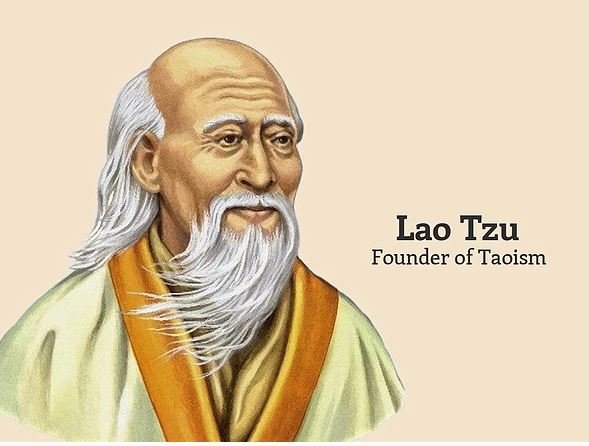
Hey Zen Masters (or Future Ones!) – Ever Feel Like You’re Fighting Life?
We’ve explored so many amazing ideas, from the deepest questions of “Who Am I, Really?” Your Epic Chat with Your Inner Self! to Buddha’s secrets for chilling your brain Now, get ready for a philosophy that doesn’t argue, doesn’t try to explain everything, but simply points to something you already know, deep down: The Way Things Naturally Move.
This is the wisdom of Taoism (pronounced: DOW-izm). It’s an ancient Chinese philosophy that says maybe, just maybe, life doesn’t have to be a constant struggle. Maybe there’s a way to flow with life, instead of always fighting it.
The Tao: It’s Everywhere, But You Can’t Trap It!

The Tao is often translated as “The Way.” But it’s not like a road map or a set of rules. It’s more like the natural, spontaneous unfolding of everything in existence!
- Trying to define it completely? It shrinks.
- Trying to capture it with words? It slips away.
The Tao that can be described perfectly isn’t the living, breathing Tao. This is not mystification; it’s humility before reality. It reminds me of how science, the deeper it goes into Invisible Worlds: Atoms, Energy, and the Quantum Turn, finds that certainty dissolves into something more subtle and fluid.
Nature’s Teacher: Look at Water!

Taoism doesn’t start with complicated ideas. It starts with simple observation. Take a look outside – especially at water!
- Water doesn’t argue with a rock; it just flows around it.
- Water doesn’t try to climb a mountain; it settles into the lowest valley.
- Yet, over time, water can carve out canyons and shape mountains!
This is a huge secret: softness overcomes hardness, not by force, but by continuity. Nature doesn’t hurry, yet everything gets done. Think about how life itself emerged in Life Questions Itself: Evolution, DNA, and the Emergence of Complexity – life didn’t force itself into being; it gradually emerged through natural processes.
The Problem of Forcing: Why We Get Stressed Out!
A lot of our stress, our restlessness (the very thing Buddha talked about in Chill Your Brain: Buddha’s Secret to Being Happy in a Crazy World!), comes from constantly forcing things:
- Forcing success.
- Forcing identity.
- Forcing recognition.
- Forcing change.
When we constantly push against the rhythm of life, tension grows. The Tao gently asks: What would happen if you just tried to struggle less?
This isn’t about being lazy or passive! It’s about alignment – acting with the natural timing of things. When your actions flow with the situation, effort feels lighter, almost effortless.
Wu Wei: The Art of Effortless Action
This is the cool Taoist concept called Wu Wei (pronounced: WOO-WAY). It doesn’t mean “doing nothing.” It means acting without strain or forced effort.
Think about breathing. If you try too hard to control every breath, it feels unnatural and uncomfortable. But if you just let it happen, it flows perfectly. Life is kind of the same.
When your actions come from a place of clarity and calm (like the inner stillness we practice in Upanishads Teaches: Simple Practices for Inner Stillness), rather than from anxiety or desperately trying to prove something, they become natural and powerful.
The Taoist master acts, but does not obsess over the results. They work, but do not demand ownership. They move, but do not resist change.
Simplicity is Your Superpower!
The Taoist way loves simplicity. Not because being complicated is bad, but because too much stuff, too many desires, too many comparisons just clutter your mind and cloud your vision.
- Too many desires scatter your attention.
- Too many comparisons to others steal your happiness.
Simplicity brings steadiness. When there’s less internal noise (like in our Conversation with Myself), you can see things more clearly, and you can respond to life better.
Staying Centered in a Spinning World

Life is full of cycles, right? Growth and decline. Gain and loss. Day and night. The Tao does not resist these movements; it flows with them.
To find your center isn’t about escaping change. It’s about staying balanced within change. Imagine the axle of a wheel: still at the center, while the rim rotates rapidly. That’s you, finding your quiet balance while the world whirls around.
Living Without Constantly Proving Yourself
A Taoist sage does not dominate. They do not need to prove. They do not compete constantly.
- True strength doesn’t need display.
- Real wisdom doesn’t need argument.
When your ego (that part of you that wants to always be right or look good) softens, your interactions with others become much smoother, with less friction and less inner drama. It’s about finding that Quiet Balance.
The Tao does not promise some big, dramatic, instant enlightenment. It offers balance. It gently reminds you:
- Walk gently.
- Speak thoughtfully.
- Act naturally.
When we stop forcing the river of life to go our way, we often discover that we were already being carried perfectly all along. The Way was never missing; we were just resisting it. In quiet alignment, movement becomes ease. Not rigid, not passive, but perfectly balanced.
For More Exploration:
-
- Read the Tao Te Ching: Explore the original text by Lao Tzu. Find translations like the Tao E Ching
