


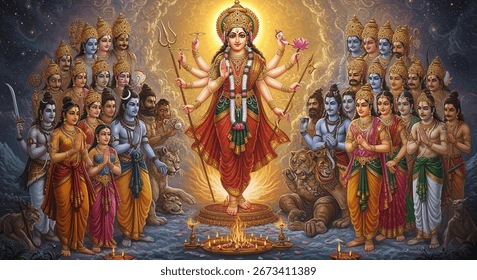
Intoduction
Indian mythology isn’t just a collection of ancient stories; it’s a vibrant, living tradition that shapes culture, ethics, and philosophy. These timeless narratives echo in our festivals, inspire art and music, influence modern media, and guide daily life in India. Far more than tales, they are a blend of history, metaphor, poetry, and profound philosophical insights.
The Ancient Roots: Vedas, Epics, and Puranas
The journey of Indian mythology begins with the ancient Indus Valley Civilization, evolving through the Vedic period with foundational texts like the Vedas. These sacred hymns laid the groundwork for a worldview where the universe is sacred, cyclical, and deeply interconnected.
This rich foundation expanded into the grand narrative traditions of the Ramayana and the Mahabharata (the Itihasas), followed by the Puranas, which delve deeper into cosmology, divine genealogies, and moral allegories. Together, these texts have profoundly influenced India’s religion, art, literature, and social fabric for millennia.

The Divine Pantheon: Unity in Diversity
At the core of Indian mythology lies the Trimurti, a cosmic trinity representing the fundamental forces of existence:
- Brahma, the Creator: Symbolizes manifestation and the unfolding of cosmic order.
- Vishnu, the Preserver: Sustains universal harmony, incarnating as avatars like Rama and Krishna to restore balance when righteousness declines.
- Shiva, the Destroyer and Transformer: Represents renewal through destruction, embodying the rhythmic cycles of the cosmos in his cosmic dance, the Tandava.
Complementing the Trimurti is Shakti, the Divine Feminine. Goddesses like Durga, Kali, Lakshmi, and Saraswati represent strength, transformation, prosperity, and wisdom, affirming that feminine energy is the vital pulse of creation.

The Epic Narratives: Moral and Cosmic Drama
The Ramayana, attributed to Sage Valmiki, tells the heroic journey of Rama to rescue his wife Sita from the demon king Ravana. It’s an epic exploring devotion, loyalty, sacrifice, and dharma, with Hanuman embodying unwavering faith.
The Mahabharata, the world’s longest epic poem by Sage Vyasa, recounts the complex dynastic conflict between the Pandavas and Kauravas, culminating in the Kurukshetra War. Embedded within it is the Bhagavad Gita, a profound philosophical dialogue where Arjuna and Krishna discuss duty, ethics, and self-realization. These teachings remain central to spiritual inquiry worldwide.
These epics are more than just stories of heroes; they are deep explorations of human psychology, moral dilemmas, and cosmic justice.

Cosmic Depth of creation
Symbolism, Creation, and Cosmic Cycles
Indian mythology is teeming with symbolism. Creation myths describe a universe that is infinite and cyclical, undergoing endless cycles of birth, sustenance, and dissolution—mirroring life’s own rhythms.
Animals often serve as divine vehicles (vahanas). Garuda, Vishnu’s mount, symbolizes strength, while Nandi, Shiva’s bull, signifies loyalty. Mythical beings like rakshasas and nagas illustrate the eternal tension between ignorance and enlightenment, chaos and order. The concept of Chiranjivis—immortals like Hanuman and Parashurama—highlights the continuous divine presence throughout time.
Indian Mythology Enduring Influence in Modern India
I
Indian mythology is far from being confined to the past. It actively shapes:
- Festivals: Diwali celebrates Rama’s return, and Holi is associated with Krishna’s playful divine love.
- Arts: Classical dance forms like Bharatanatyam and Kathak retell mythological episodes. Temple architecture, sculpture, and painting continue to depict these sacred themes.
- Modern Media: Mythology finds new life in Indian cinema, television series, graphic novels, and digital content.
Scholars continually reinterpret these stories, exploring their relevance in contemporary ethical and social contexts. This dynamic engagement reflects a living tradition that encourages questioning and reflection rather than blind acceptance.
A Living Tradition of Wisdom
Please click here for our next Journey to Samudra Manthan
