

Close Menu
lifedevote.comlifedevote.com
    Facebook X (Twitter) Instagram
    Trending
    • Awakening of Janaka : Aastavakra Geeta
    • Sagun vs. Nirgun: Two Paths to the Divine
    • Samundra Manthan and AI Age Churning of DATA
    • The Bhagwad Geeta : AI Blueprint for Robotic Age
    • AI & Advaita: Neural Networks in Divine Thought
    • Bhagwad Gita, Ashtavakra Gita and Yoga Vasistha:Comparative Study
    • Shanti Parva : Mahabharata
    • UdyogaParva Mahabharata Krishna’s Peace Mission
    Facebook X (Twitter) Instagram YouTube
    lifedevote.comlifedevote.com
    Demo
    • Home
    • Mythology
    • Philosophy
    • Science
    • Relegion
    • Books
    • Story Tales
    lifedevote.comlifedevote.com
    Home»Philosophy»Unveiling the Wisdom of India
    Philosophy

    Unveiling the Wisdom of India

    GANPAT VYASBy GANPAT VYASFebruary 4, 2026Updated:March 8, 2026No Comments7 Mins Read
    Share
    Facebook Twitter LinkedIn Pinterest Email

    Table of Contents

    Toggle
    • Introduction
    • 1. The Ancient Roots and Core Tenets: A Perennial Pursuit of Truth
    • 2. The Orthodox (Āstika) Schools: Anchored in Vedic Authority
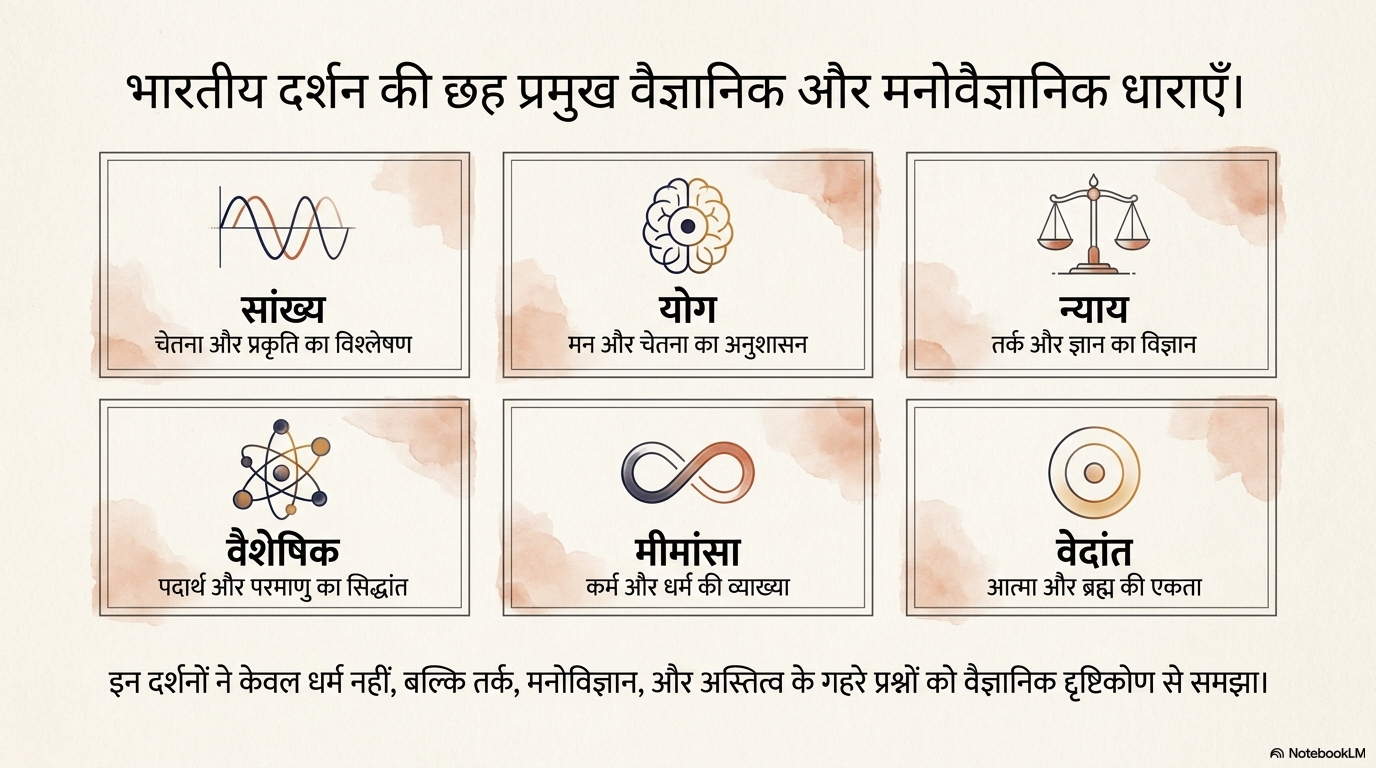
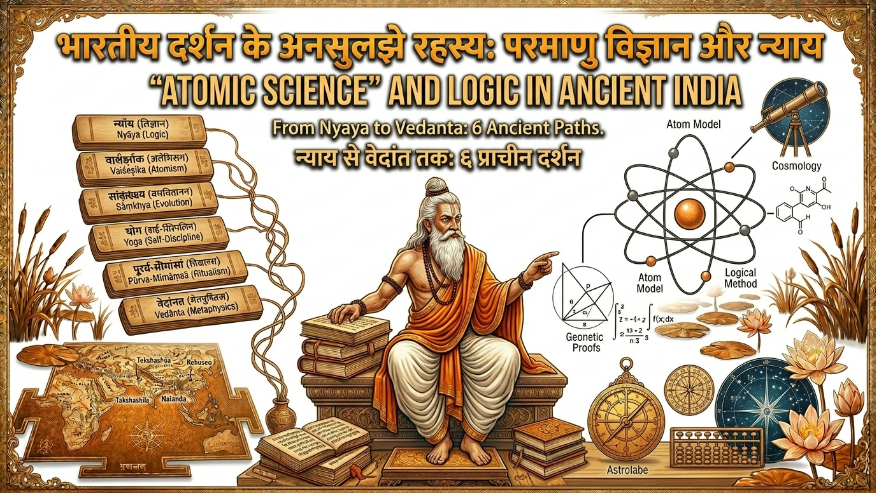
      • a. Nyaya (Logic and Epistemology):
      • b. Vaisheshika (Atomism and Metaphysics):
      • c. Samkhya (Dualism and Evolution):
      • d. Yoga (Practical Philosophy for Liberation):
      • e. Purva Mimamsa (Vedic Ritualism):
      • f. Vedanta (End of the Vedas):
    • 3. Heterodox (Nāstika) Schools: Challenging the Vedic Paradigm
      • a. Buddhism:
      • b. Jainism
      • c. Charvaka / Lokayata (Materialism):
    • 4. Enduring Legacy and Global Impact

    Introduction

    India, a land steeped in ancient traditions and spiritual inquiry, has for millennia been a cradle of profound philosophical thought. Far from being a monolithic system, Indian Philosophy is a vibrant tapestry woven from diverse perspectives, rigorous logical reasoning, and deep meditative insights. It represents not just a collection of intellectual exercises, but a holistic quest for understanding the fundamental nature of reality, the human condition, and the path to ultimate liberation or enlightenment. Unlike Western philosophy’s occasional separation from religious doctrine, in India, philosophy and spiritual practice have historically been deeply intertwined, with abstract metaphysical theories often leading directly to prescribed ways of living. This journey into India’s philosophical landscape will uncover how ancient minds grappled with universal questions, offering timeless wisdom that continues to resonate globally today.

    1. The Ancient Roots and Core Tenets: A Perennial Pursuit of Truth

    The origins of Indian philosophical inquiry stretch back over three millennia, primarily rooted in the Vedas—the oldest sacred texts of Hinduism. These ancient scriptures laid the foundational questions concerning cosmic order (Rita), the nature of the divine, the cycle of birth and death (samsara), and the concept of karma. However, Indian philosophy rapidly evolved beyond mere scriptural exegesis, developing sophisticated systems of logic, epistemology (the study of knowledge), metaphysics (the study of fundamental reality), ethics, and psychology. At its heart, a core tenet across many schools is the pursuit of moksha, or liberation from suffering and the cycle of rebirth, through self-realization and understanding. This pursuit often involves rigorous self-discipline, meditation, and a keen analytical approach to understanding perception, consciousness, and the self.

    Adi Shankaracharya - The Greatest Teacher of Advaita Vedanta

    2. The Orthodox (Āstika) Schools: Anchored in Vedic Authority

    The vast panorama of Indian philosophical thought is broadly categorized into two major divisions: the Orthodox (Āstika) and Heterodox (Nāstika) schools. The Āstika schools are distinguished by their acceptance, to varying degrees, of the Vedas as a valid and authoritative source of knowledge. Each school developed unique methodologies and perspectives, yet often engaged in vibrant debates and cross-pollination of ideas.

    a. Nyaya (Logic and Epistemology):

    • The Science of Right Knowing The Nyaya school is renowned for its systematic development of logic and epistemology. It meticulously details the means of acquiring valid knowledge (pramanas), such as perception (pratyaksha), inference (anumana), comparison (upamana), and verbal testimony (shabda). Nyaya thinkers were pioneers in formal logic, establishing rigorous frameworks for argument and debate, making it a foundational discipline for all other philosophical studies.

    b. Vaisheshika (Atomism and Metaphysics):

    • b. Vaisheshika (Atomism and Metaphysics): Deconstructing Reality Often paired with Nyaya, the Vaisheshika school delved into the nature of reality through an atomistic and pluralistic metaphysics. It postulated that the universe is composed of irreducible, eternal atoms (anu) and categorized all knowable objects and experiences into six fundamental categories (padarthas): substance, quality, action, generality, particularity, and inherence. This school sought to explain the material world in a systematic, almost scientific, manner.

    c. Samkhya (Dualism and Evolution):

    • The Dance of Consciousness and Matter Samkhya is one of the oldest and most influential schools, proposing a radical dualism between two ultimate realities: Purusha (consciousness or self) and Prakriti (primordial matter or nature). It describes the evolution of the universe from Prakriti into twenty-four constituent principles, including intellect, ego, mind, and the senses. Samkhya offers a detailed cosmology and psychology, emphasizing the distinction between the passive, witnessing consciousness and the active, evolving material world.

    d. Yoga (Practical Philosophy for Liberation):

    • The Path to Union Closely associated with Samkhya, the Yoga school, particularly as systematized by Patanjali in the Yoga Sutras, is a practical philosophy focused on achieving liberation through mental discipline and meditation. It outlines an eight-limbed path (Ashtanga Yoga) encompassing ethical restraints, observances, postures, breath control, sensory withdrawal, concentration, meditation, and ultimate absorption (samadhi). Yoga aims to still the fluctuations of the mind, allowing the Purusha (consciousness) to realize its true, independent nature.

    e. Purva Mimamsa (Vedic Ritualism):

    •  The Authority of Action The Purva Mimamsa school primarily concerned itself with the correct interpretation and application of the Vedas, particularly their injunctions regarding ritual and duty (dharma). It emphasized the importance of performing Vedic rituals precisely, believing that such actions lead to desired outcomes and uphold cosmic order. This school developed sophisticated principles of hermeneutics (interpretation) to ascertain the exact meaning and purpose of Vedic commands.

    f. Vedanta (End of the Vedas):

    •  The Ultimate Reality Vedanta, meaning “the end or culmination of the Vedas,” is arguably the most prominent and influential school of Indian philosophy. It draws its insights from the Upanishads, the philosophical sections of the Vedas. Vedanta explores the nature of Brahman (the ultimate reality or Absolute Truth) and its relationship to Atman (the individual soul or self). Within Vedanta, several sub-schools emerged, with Advaita Vedanta (non-dualism, championed by Adi Shankara) asserting the absolute oneness of Atman and Brahman, Vishishtadvaita (qualified non-dualism by Ramanuja) positing a qualified unity, and Dvaita (dualism by Madhvacharya) maintaining a distinct separation between them. Vedanta’s central quest is to realize the true nature of reality and the self, leading to moksha.

    2,622 Indian Philosophy Stock Photos - Free & Royalty-Free ...

    3. Heterodox (Nāstika) Schools: Challenging the Vedic Paradigm

    In contrast to the Āstika traditions, the Nāstika schools are those that do not accept the Vedas as an infallible authority. While some reject the concept of a divine creator or an eternal soul, they are no less rigorous in their philosophical inquiry and have profoundly shaped the intellectual landscape of India.

    a. Buddhism:

    • Founded by Siddhartha Gautama (the Buddha), Buddhism emerged as a powerful counter-narrative, offering a path to liberation (nirvana) based on personal experience and insight rather than ritual or divine intervention. Its core teachings revolve around the Four Noble Truths (the nature of suffering, its origin, its cessation, and the path to cessation) and the Eightfold Path, emphasizing ethical conduct, mental discipline, and wisdom. Buddhist philosophy explored concepts of impermanence (anicca), suffering (dukkha), non-self (anatta), and dependent origination (pratītyasamutpāda), leading to diverse schools like Theravada, Mahayana, and Vajrayana.

    b. Jainism

    •  Propounded by Mahavira, Jainism is characterized by its strict asceticism, emphasis on non-violence (ahimsa) towards all living beings, and a sophisticated metaphysics. Jain philosophy posits the existence of an infinite number of eternal, independent souls (jivas) and an equally eternal non-soul (ajiva) that constitutes the universe. Liberation in Jainism is achieved by purifying the soul through ethical living, rigorous self-control, and the removal of karma (seen as subtle particles that adhere to the soul).

    c. Charvaka / Lokayata (Materialism):

    •  The Earthly Pursuit The Charvaka school, also known as Lokayata, stands as a starkly materialistic and atheistic tradition within Indian philosophy. It rejected all supernatural claims, Vedic authority, and the existence of an afterlife or a soul separate from the body. Charvaka epistemology recognized only direct perception as a valid source of knowledge, leading them to conclude that only the material world is real. They advocated for ethical hedonism, emphasizing the enjoyment of life in the present moment, as there is no heaven or hell, and pleasure is the ultimate good.

    4. Enduring Legacy and Global Impact

    The rich tapestry of Indian philosophy, with its diverse schools and profound inquiries, has left an indelible mark not only on the Indian subcontinent but also on global thought. Concepts like karma, dharma, yoga, moksha, and the intricate logical systems developed by Nyaya thinkers have influenced spiritual movements, academic discourse, and personal development practices worldwide. From the contemplative practices of mindfulness and meditation derived from Buddhism and Yoga, to the ethical principles of non-violence rooted in Jainism, and the sophisticated metaphysical debates of Vedanta, Indian philosophy continues to offer powerful frameworks for understanding ourselves and our place in the cosmos. Its enduring relevance lies in its holistic approach to existence, integrating ethics, metaphysics, epistemology, and practical guidance for living a meaningful life, making it a timeless source of wisdom for humanity.

    Please click here for further exploring –Self,Consciousness and Free Will

    Please Click here for IndianPhilosophy


    Buddhist Philosophy Dharma Hindu Philosophy Indian Philosophy Indian Thought Jain Philosophy Karma Moksha Nyaya Purva Mimamsa Samkhya spirituality Vaisheshika Vedanta Vedic Philosophy Yoga
    Share. Facebook Twitter Pinterest LinkedIn WhatsApp Reddit Tumblr Email
    GANPAT VYAS
    • Website

    I am Ganpat Lal Vyas son of late Shri Madan Lal Vyas and late Smt Rukmani Devi. Curiosity has always been the guiding force of my life. I am a science graduate with post-graduation in economics and served in banking for my livelihood. From my early studies, especially science, I was deeply inspired to explore beyond textbooks and classrooms. Though professional life limited deep academic pursuit, the thirst to know never faded. After retirement, I am free to explore the unknown realms of science, philosophy, and existence. This website reflects my lifelong journey of inquiry and learning.

    Related Posts

    Sagun vs. Nirgun: Two Paths to the Divine

    March 10, 2026

    Bhagwad Gita, Ashtavakra Gita and Yoga Vasistha:Comparative Study

    March 5, 2026

    Shanti Parva : Mahabharata

    March 4, 2026
    Leave A Reply Cancel Reply

    Pick Your Language
    Facebook X (Twitter) Instagram Pinterest
    © 2026 ThemeSphere. Designed by ThemeSphere.

    Type above and press Enter to search. Press Esc to cancel.