



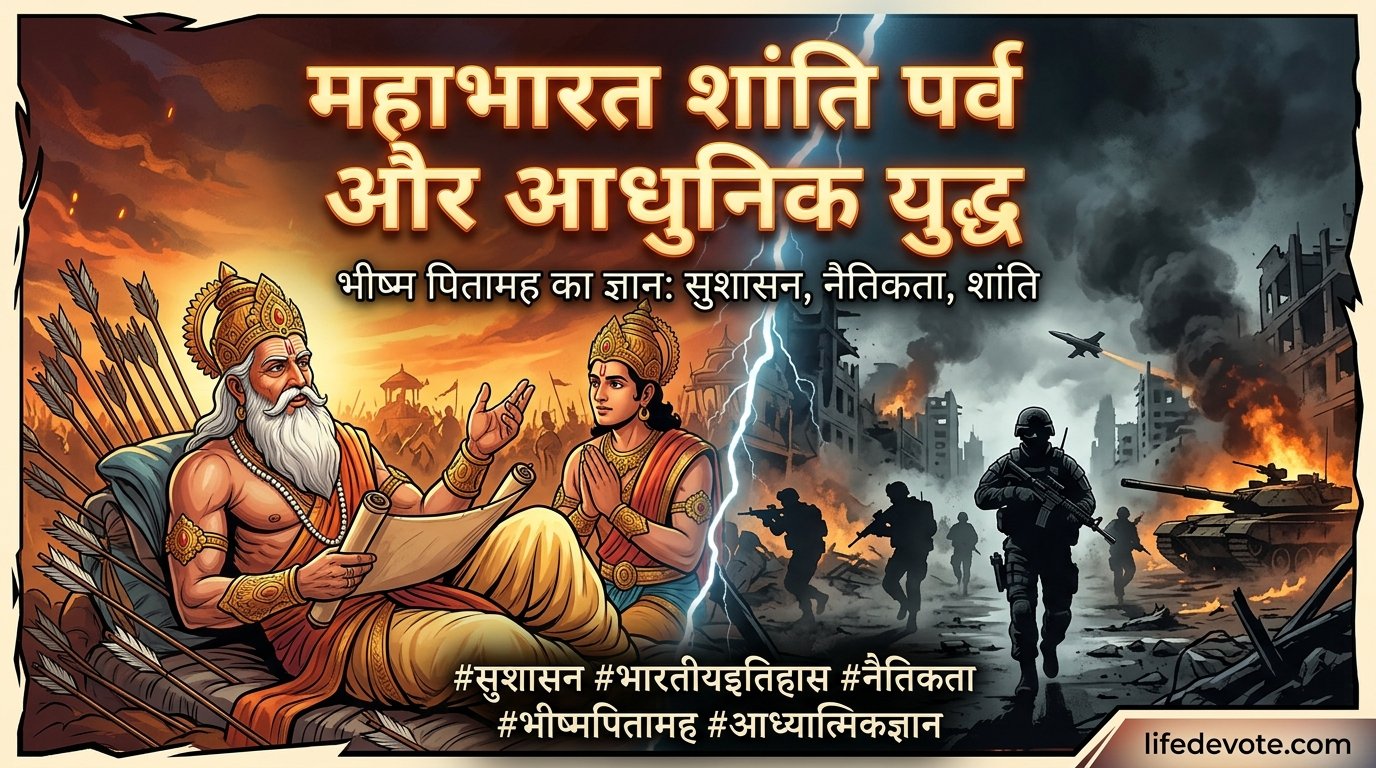
महाभारत शांति पर्व: सुशासन और आधुनिक युद्ध संघर्ष की सीख
महाभारत शांति पर्व (Mahabharat Shanti Parva) भारतीय इतिहास और दर्शन का वह अमूल्य खजाना है, जो युद्ध की विभीषिका के बाद शांति और न्याय की स्थापना का मार्ग प्रशस्त करता है। कुरुक्षेत्र के विनाशकारी युद्ध के अंत में, जब युधिष्ठिर शोक और वैराग्य से घिरे हुए थे, तब भीष्म पितामह ने उन्हें शरशय्या पर लेटे हुए राज्य संचालन और जीवन दर्शन का गहन ज्ञान दिया था। यह पर्व केवल एक पौराणिक कथा नहीं है, बल्कि राजनीति विज्ञान, कूटनीति और नैतिकता का एक व्यापक विश्वकोश है, जो आज के समय में भी उतना ही प्रासंगिक है जितना हजारों साल पहले था।
[ ऑडियो सारांश: महाभारत शांति पर्व की भूमिका और भीष्म का उपदेश ]
Mahabharat Shanti Parva का महत्व और इसकी संरचना
महाभारत शांति पर्व को अठारह पर्वों में सबसे लंबा और ज्ञानवर्धक माना जाता है। इसमें कुल 365 अध्याय और लगभग 13,716 श्लोक हैं। विद्वानों के अनुसार, इस पर्व को तीन प्रमुख उप-पर्वों में विभाजित किया गया है, जो मानव जीवन के विभिन्न आयामों को कवर करते हैं:
- राजधर्मानुशासन पर्व: यह राजा के कर्तव्यों, शासन प्रणाली और सुशासन (Good Governance) पर केंद्रित है।
- आपद्धर्म पर्व: यह संकट के समय और आपातकालीन स्थितियों में अपनाए जाने वाले नैतिक आचरण और रणनीतियों का वर्णन करता है।
- मोक्षधर्म पर्व: यह आध्यात्मिक मुक्ति, सांख्य दर्शन और आत्मज्ञान के मार्ग की व्याख्या करता है।
इस संरचना के माध्यम से भीष्म ने समझाया कि एक कुशल शासक को न केवल भौतिक समृद्धि पर ध्यान देना चाहिए, बल्कि प्रजा के नैतिक और आध्यात्मिक उत्थान के लिए भी प्रयास करना चाहिए।
Mahabharat Shanti Parva और सुशासन के प्राचीन सिद्धांत
सुशासन का विचार शांति पर्व के मूल में है। भीष्म के अनुसार, राजा का धर्म केवल सत्ता का भोग नहीं, बल्कि प्रजा का कल्याण है। यहाँ कुछ प्रमुख सिद्धांत दिए गए हैं:
- दंडनीति का महत्व: शासन का वह विज्ञान जो बल और न्याय के संतुलन से समाज में व्यवस्था बनाए रखता है।
- प्रजा-रंजन: राजा का मुख्य कर्तव्य अपनी प्रजा को सुखी और सुरक्षित रखना है। यदि प्रजा दुखी है, तो राजा अपने धर्म से च्युत माना जाता है।
- मंत्रियों का चयन: शासन की सफलता योग्य, ईमानदार और चतुर मंत्रियों पर निर्भर करती है।
- कर प्रणाली: कर (Tax) का बोझ प्रजा पर उतना ही होना चाहिए जितना मधुमक्खी फूल से रस लेती है, जिससे न फूल को नुकसान हो और न मधुमक्खी को कमी।
[राजधर्म और सुशासन के बारे में अधिक विस्तार से पढ़ें]
भीष्म ने युधिष्ठिर को यह भी सिखाया कि धर्म केवल व्यक्तिगत नहीं होता, बल्कि एक राजा के लिए ‘राजधर्म’ सर्वोच्च होता है, जिसमें कभी-कभी कठिन निर्णय भी लेने पड़ते हैं।
[ वीडियो: भीष्म और युधिष्ठिर का संवाद और आधुनिक राजनीति ]
आधुनिक युद्ध और रणनीतिक सोच में इसकी प्रासंगिकता-Mahabharat Shanti Parva
आज के दौर में जब वैश्विक स्तर पर युद्ध और संघर्ष बढ़ रहे हैं, महाभारत शांति पर्व रणनीतिक सोच (Strategic Thought) के लिए एक महत्वपूर्ण मार्गदर्शक है। आधुनिक राजनीति वैज्ञानिक भी मानते हैं कि शांति पर्व के सिद्धांत मैकियावेली और सन त्ज़ु जैसे विचारकों के करीब हैं।
- शक्ति संतुलन: भीष्म ने बताया कि एक कमजोर राजा को शक्तिशाली शत्रु के साथ कैसा व्यवहार करना चाहिए—बाहरी रूप से मित्रता लेकिन भीतर से सतर्कता।
- युद्ध और कूटनीति: युद्ध केवल अंतिम विकल्प होना चाहिए, और यदि अनिवार्य हो, तो उसे कम से कम विनाश के साथ समाप्त करने का प्रयास करना चाहिए।
- न्यायपूर्ण युद्ध (Just War): युद्ध के मैदान में भी नैतिकता का पालन आवश्यक है, जो आज के अंतर्राष्ट्रीय मानवीय कानूनों (Humanitarian Laws) का आधार है।
शांति पर्व हमें सिखाता है कि युद्ध के बाद की शांति (Peace after war) को बनाए रखना युद्ध जीतने से कहीं अधिक कठिन कार्य है।
विद्वानों की बहस: प्रक्षेप और कालक्रम – Mahabharat Shanti Parva
शांति पर्व की मौलिकता और इसके कालक्रम को लेकर विद्वानों में काफी चर्चा होती रही है। नीलेश ओक और श्रीकांत तलगेरी जैसे शोधकर्ताओं ने खगोलीय साक्ष्यों के आधार पर महाभारत के समय और इसके विभिन्न हिस्सों के जुड़ाव पर अपने विचार रखे हैं। कुछ विद्वान इसे बाद का ‘प्रक्षेप’ (Interpolation) मानते हैं क्योंकि इसकी दार्शनिक गहराई अन्य युद्ध-केंद्रित पर्वों से भिन्न है, जबकि अन्य इसे व्यास की मूल रचना का अभिन्न अंग मानते हैं जो युद्ध की निरर्थकता को दर्शाता है।
[ भारतीय इतिहास के कालक्रम पर शोध लेख पढ़ें ]
महाभारत श्रृंखला के अन्य महत्वपूर्ण लेख:
महाभारत के 18 पर्वों का दार्शनिक अर्थ
आदि पर्व : महाभारत की शुरुआत और संघर्ष का रहस्य
द्रौपदी और धर्म की परीक्षा
भीष्म पर्व : भगवद्गीता और कुरुक्षेत्र का रहस्य
कृष्ण का शांति मिशन और जीवन संदेश
अक्सर पूछे जाने वाले प्रश्न महाभारत शांति पर्व
1. महाभारत शांति पर्व में कुल कितने उप-पर्व हैं? शांति पर्व मुख्य रूप से तीन उप-पर्वों में विभाजित है: राजधर्मानुशासन पर्व, आपद्धर्म पर्व और मोक्षधर्म पर्व।
2. भीष्म ने युधिष्ठिर को उपदेश कब दिया था? भीष्म ने यह उपदेश कुरुक्षेत्र युद्ध की समाप्ति के बाद, अपनी मृत्यु से पूर्व शरशय्या पर लेटे हुए दिया था।
3. शांति पर्व को ‘शांति’ का पर्व क्यों कहा जाता है? क्योंकि यह युद्ध के कोलाहल के बाद मानसिक, राजनैतिक और आध्यात्मिक शांति स्थापित करने के सिद्धांतों पर चर्चा करता है।
4. क्या शांति पर्व के सिद्धांत आधुनिक शासन व्यवस्था में लागू हो सकते हैं? हाँ, इसके सुशासन, निष्पक्ष कर प्रणाली और न्याय के सिद्धांत आज के लोकतांत्रिक ढांचे में भी अत्यंत प्रासंगिक हैं।
निष्कर्ष: महाभारत शांति पर्व केवल एक प्राचीन ग्रंथ नहीं है, बल्कि यह संकट के समय में मानवता का पथ-प्रदर्शक है। चाहे वह व्यक्तिगत जीवन का तनाव हो या राष्ट्रों के बीच का युद्ध, इस पर्व में निहित भीष्म का ज्ञान हमें शांति और धर्म की ओर ले जाता है। हमें अपनी जड़ों की ओर लौटकर इन महान सिद्धांतों को फिर से समझना चाहिए ताकि एक न्यायपूर्ण विश्व का निर्माण हो सके।
क्या आप अपने जीवन में शांति और संतुलन चाहते हैं? आज ही महाभारत शांति पर्व के गहन दर्शन को अपनाएँ और सुशासन की कला सीखें!
