



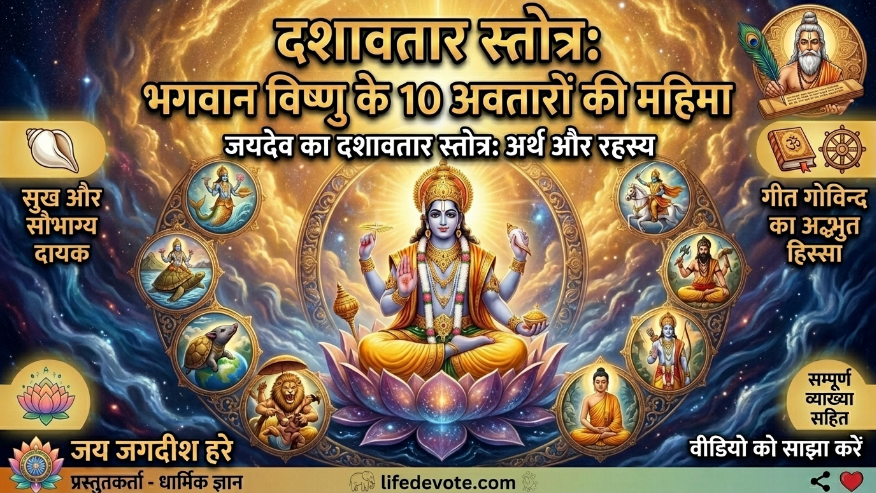
दशावतार स्तोत्र: जयदेव की दिव्य काव्य चेतना
परिचय
भारतीय भक्ति साहित्य में दशावतार स्तोत्र केवल स्तुति नहीं, बल्कि मानव चेतना के विकास की एक आध्यात्मिक यात्रा है। 12वीं सदी के महान कवि जयदेव ने इस स्तोत्र में भगवान विष्णु के दस अवतारों को केवल पौराणिक घटनाओं के रूप में नहीं, बल्कि धर्म, करुणा, ज्ञान और आत्मजागरण के प्रतीकों के रूप में प्रस्तुत किया है।
मत्स्य अवतार — ज्ञान की रक्षा का दिव्य संदेश
प्रलय-पयोधि-जले धृतवान् असि वेदं
विहित-वहित्र-चरित्रम् अखेदम् ।
केशव धृत-मीन-शरीर!
जय जगदीश हरे ॥
सरल अर्थ
जब प्रलय के जल में वेद डूब गए, तब भगवान ने मत्स्य रूप धारण कर ज्ञान को सुरक्षित रखा।
आध्यात्मिक विश्लेषण
जयदेव यहाँ केवल जलप्रलय की कथा नहीं कहते। वे संकेत देते हैं कि जब संसार अज्ञान, अहंकार और भ्रम में डूब जाता है, तब दिव्य चेतना स्वयं ज्ञान की नाव बनकर मानवता को बचाती है।
मत्स्य अवतार यह सिखाता है कि सत्य कभी नष्ट नहीं होता; वह केवल समय के अंधकार में छिप जाता है और फिर पुनः प्रकट होता है।
जीवन संदेश
ज्ञान ही जीवन के प्रलय से पार लगाने वाली नाव है।
कूर्म अवतार — धैर्य और स्थिरता का आधार
क्षितिरति-विपुलतरे तिष्ठति तव पृष्ठे
धरणि-धरण-किण-चक्र-गरिष्ठे ।
केशव धृत-कूर्म-शरीर!
जय जगदीश हरे ॥
सरल अर्थ
भगवान ने कच्छप रूप धारण कर समुद्र मंथन के लिए पर्वत को अपनी पीठ पर संभाला।
आध्यात्मिक विश्लेषण
समुद्र मंथन केवल देवताओं और दैत्यों का संघर्ष नहीं, बल्कि मानव मन का मंथन है।
कूर्म अवतार सिखाता है कि जीवन के भीतर अमृत पाने के लिए पहले धैर्य, संतुलन और स्थिरता का आधार चाहिए। बिना स्थिर चेतना के ज्ञान का मंथन संभव नहीं।
जीवन संदेश
जिसका मन स्थिर है, वही जीवन के विष को अमृत में बदल सकता है।
वराह अवतार — गिरती चेतना को उठाने वाला प्रकाश
वसति दशन-शिखरे धरणी तव लग्ना
शशिनि कलंक-कलेव निमग्ना ।
केशव धृत-शूकर-रूप!
जय जगदीश हरे ॥
सरल अर्थ
भगवान वराह ने समुद्र में डूबी पृथ्वी को अपने दाँतों पर उठाया।
आध्यात्मिक विश्लेषण
जयदेव की दृष्टि में पृथ्वी केवल मिट्टी नहीं, बल्कि मानव चेतना है जो कभी-कभी अधर्म और मोह में डूब जाती है।
वराह अवतार बताता है कि दिव्यता हमेशा गिरती हुई आत्मा को पुनः प्रकाश की ओर उठाती है।
जीवन संदेश
जब मन अंधकार में डूबता है, तब भीतर का ईश्वर ही उसे ऊपर उठाता है।
नृसिंह अवतार — भक्त की रक्षा का उग्र करुणा रूप
तव कर-कमल-वरे नखम् अद्भुत-शृंगं
दलित-हिरण्यकशिपु-तनु-भृंगम् ।
केशव धृत-नरहरि-रूप!
जय जगदीश हरे ॥
सरल अर्थ
भगवान ने नृसिंह रूप में हिरण्यकश्यप का अंत कर भक्त प्रह्लाद की रक्षा की।
आध्यात्मिक विश्लेषण
यह अवतार बताता है कि सच्चा भक्त भय से परे होता है।
नृसिंह का उग्र रूप वास्तव में करुणा का ही रूप है — वह शक्ति जो निर्दोष की रक्षा और अहंकार के विनाश के लिए प्रकट होती है।
जीवन संदेश
जहाँ अटूट विश्वास होता है, वहाँ ईश्वर स्वयं प्रकट होते हैं।
वामन अवतार — विनम्रता की विराट शक्ति
छलयसि विक्रमणे बलिमद्भुत-वामन
पद-नख-नीर-जनित-जन-पावन ।
केशव धृत-वामन-रूप!
जय जगदीश हरे ॥
सरल अर्थ
भगवान ने वामन रूप में राजा बलि से तीन पग भूमि माँगकर सम्पूर्ण ब्रह्मांड को नाप लिया।
आध्यात्मिक विश्लेषण
वामन अवतार सिखाता है कि ईश्वर की वास्तविक शक्ति विनम्रता में छिपी होती है।
राजा बलि का समर्पण दिखाता है कि अहंकार का अंत ही आत्मा की वास्तविक विजय है।
जीवन संदेश
समर्पण ही आत्मा का सबसे बड़ा विस्तार है।
परशुराम अवतार — अन्याय के विरुद्ध धर्म का क्रोध
क्षत्रिय-रुधिर-मये जगदपगत-पापं
स्नपयसि पयसि शमित-भवतापम् ।
केशव धृत-भृगुपति-रूप!
जय जगदीश हरे ॥
सरल अर्थ
भगवान परशुराम ने अत्याचारी शक्तियों का नाश कर संसार को पाप से मुक्त किया।
आध्यात्मिक विश्लेषण
जयदेव यहाँ धर्म के कठोर पक्ष को दिखाते हैं।
जब शक्ति संरक्षण छोड़कर अत्याचार बन जाए, तब धर्म केवल करुणा नहीं रहता — वह न्याय का शस्त्र भी बनता है।
जीवन संदेश
धर्म कभी-कभी करुणा से नहीं, साहस से बचाया जाता है।
राम अवतार — मर्यादा और आदर्श जीवन
वितरसि दिक्षु रणे दिक्पति-कमनीयं
दशमुख-मौलि-बलिं रमणीयम् ।
केशव धृत-राम-शरीर!
जय जगदीश हरे ॥
सरल अर्थ
भगवान राम ने रावण का वध कर धर्म की पुनः स्थापना की।
आध्यात्मिक विश्लेषण
राम अवतार यह बताता है कि मनुष्य अपने कर्म, त्याग और सत्य से दिव्यता को प्राप्त कर सकता है।
राम केवल राजा नहीं, बल्कि मर्यादा की जीवित चेतना हैं।
-जीवन संदेश
सत्य और धैर्य अंततः अधर्म पर विजय प्राप्त करते हैं।
बलराम अवतार — धरती और शक्ति का संतुलन
वहसि वपुषि विशदे वसनं जलदाभं
हलहति-भीति-मिलित-यमुनाभम् ।
केशव धृत-हलधर-रूप!
जय जगदीश हरे ॥
सरल अर्थ
हलधर बलराम धरती, कृषि और शक्ति के संतुलन के प्रतीक हैं।
आध्यात्मिक विश्लेषण
बलराम का हल केवल खेती का उपकरण नहीं, बल्कि जीवन की जड़ों से जुड़े रहने का प्रतीक है।
वे बताते हैं कि शक्ति का उद्देश्य पोषण और संतुलन होना चाहिए।
जीवन संदेश
जो धरती से जुड़ा रहता है, वही भीतर से शक्तिशाली बनता है।
बुद्ध अवतार — करुणा और अहिंसा का प्रकाश
निन्दसि यज्ञ-विधेरहह श्रुति-जातं
सदय-हृदय-दर्शित-पशुघातम् ।
केशव धृत-बुद्ध-शरीर!
जय जगदीश हरे ॥
सरल अर्थ
भगवान बुद्ध ने हिंसा और पशुबलि का विरोध कर करुणा का मार्ग दिखाया।
आध्यात्मिक विश्लेषण
जयदेव बुद्ध को करुणा की चेतना के रूप में देखते हैं।
यह अवतार बताता है कि आध्यात्मिकता का सर्वोच्च रूप दया और अहिंसा है।
जीवन संदेश
जिस हृदय में करुणा है, वहीं ईश्वर का वास्तविक निवास है।
कल्कि अवतार — अंधकार के अंत की घोषणा
म्लेच्छ-निवह-निधने कलयसि करवालं
धूमकेतुमिव किमपि करालम् ।
केशव धृत-कल्कि-शरीर!
जय जगदीश हरे ॥
सरल अर्थ
कलियुग के अंत में भगवान कल्कि अधर्म का विनाश करेंगे।
आध्यात्मिक विश्लेषण
कल्कि केवल भविष्य का योद्धा नहीं, बल्कि चेतना के अंतिम जागरण का प्रतीक हैं।
जब अधर्म अपनी सीमा पार कर देता है, तब सत्य पुनः प्रकट होता है।
जीवन संदेश
अंधकार चाहे कितना भी गहरा हो, प्रकाश की वापसी निश्चित है।
दशावतार स्तोत्र — मानव चेतना की आध्यात्मिक यात्रा
जयदेव का यह स्तोत्र हमें बताता है कि विष्णु के दस अवतार केवल इतिहास नहीं हैं। वे मानव चेतना के विकास के दस चरण हैं — ज्ञान से करुणा तक, संघर्ष से समर्पण तक, और धर्म से आत्मबोध तक।
हमारी दशावतार कथा श्रृंखला भी पढ़ें
यदि आप भगवान विष्णु के अवतारों की गहरी आध्यात्मिक, वैज्ञानिक और दार्शनिक व्याख्या पढ़ना चाहते हैं, तो हमारी विशेष दशावतार कथा श्रृंखला अवश्य पढ़ें, जहाँ प्रत्येक अवतार को आधुनिक चेतना, विज्ञान और सनातन दर्शन से जोड़ा गया है।
