



Introduction: The Beginning of Creation and Preservation
Hey-What if the story of Matsya Aawtaar is not just a myth, but the hidden beginning of life, knowledge, and survival itself?
The Matsya Aawtaar is the first incarnation of Vishnu and marks the beginning of the Dashavatara. It is not just a mythological story, but a profound symbol of how life, knowledge, and order are preserved even in the face of total destruction.
“This evolutionary journey begins with aquatic life in Matsya Avatar, finds balance in Kurma Avatar, and reaches physical grounding in Varaha Avatar before transforming into higher consciousness in Narasimha avtaar…”
This avatar reveals a timeless truth—whenever chaos arises, there is always a guiding force that ensures continuity and renewal.
The Story of Matsya Aawtaar and the Great Flood
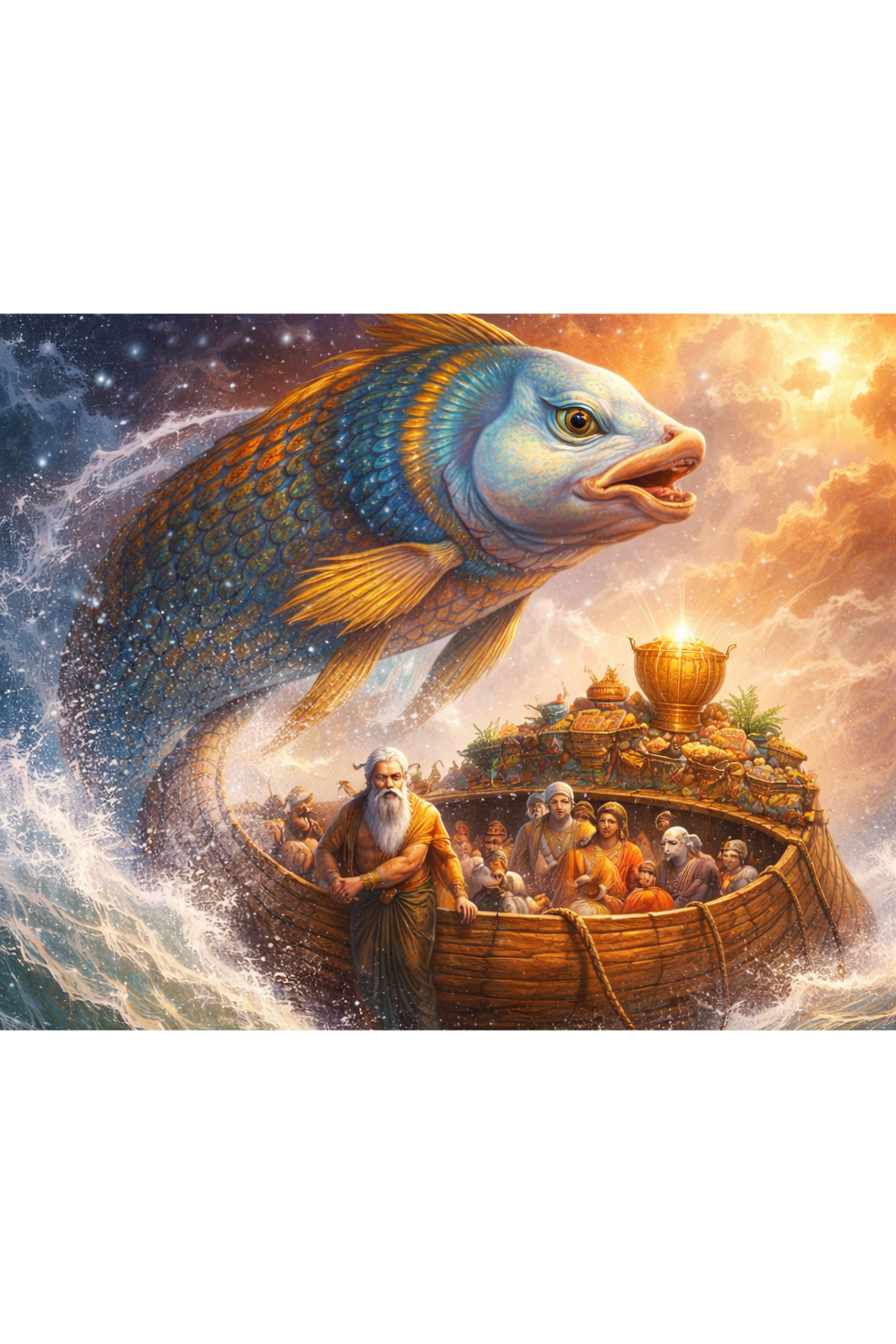
The story begins with King Manu, who encounters a small fish seeking protection. As Manu nurtures it, the fish grows rapidly, outgrowing every vessel until it becomes vast enough to fill the ocean.
At this moment, the fish reveals itself as Vishnu and warns Manu of an impending cosmic flood. Manu is instructed to build a great boat and preserve life, sages, and sacred knowledge.
When the flood arrives, Matsya guides the boat through the turbulent waters, ensuring the survival of creation and the continuity of wisdom.
The story of Matsya, known as the Matsya Avatar, represents the preservation of life and knowledge at the beginning of creation. This video explains how Lord Vishnu saved the sacred wisdom during the great flood and protected the foundation of existence.
👉Watch the video below to understand the deeper meaning of Matsya Avatar.
👉This explanation of Matsya Avatar highlights the importance of preservation and awareness in times of crisis. Continue exploring the journey through Kurma, Varaha, Narasimha, Vamana, Parashurama, Rama, Krishna, Buddha, and Kalki to understand the full evolution of the Dashavatara.
Matsya Aawtaar in Vedic and Puranic Texts
The story of Matsya Aawtaar appears across multiple sacred texts, showing its deep roots in Indian tradition.
It is mentioned in the Vedas as a symbolic fish protecting creation during a great flood. Later texts like the Mahabharata and Puranas expand the narrative, identifying the fish as Vishnu and emphasizing the preservation of the Vedas and cosmic order.
Symbolic Meaning of Matsya Aawtaar
The Matsya Aawtaar carries powerful symbolic insights that go beyond the story itself.
The preservation of the Vedas represents the protection of knowledge, reminding us that wisdom must survive even during destruction. The saving of seeds and species reflects the continuity of life, while Matsya guiding the boat symbolizes divine direction during uncertain times.
Scientific and Philosophical Interpretation
The Matsya Aawtaar can be understood through a modern lens as well. It reflects the idea that life originated in water and evolved through stages of adaptation and survival.
It also represents the cyclical nature of existence—creation, destruction, and renewal—showing that every end is also a new beginning.
Why Vishnu Took the Matsya Aawtaar
Vishnu chose the form of a fish because it was the most suitable for navigating a cosmic flood.
Key Reasons:
- A fish can survive and move freely in water
- It symbolizes adaptability and transformation
- It represents guidance through chaos
Connection to the 10 Avatars of Vishnu
Matsya Aawtaar is the starting point of the evolutionary journey in the Dashavatara:
- Matsya → Life in water
- Kurm → Transition phase
- Varah → Land development
Temples of Matsya Aawtaar in India

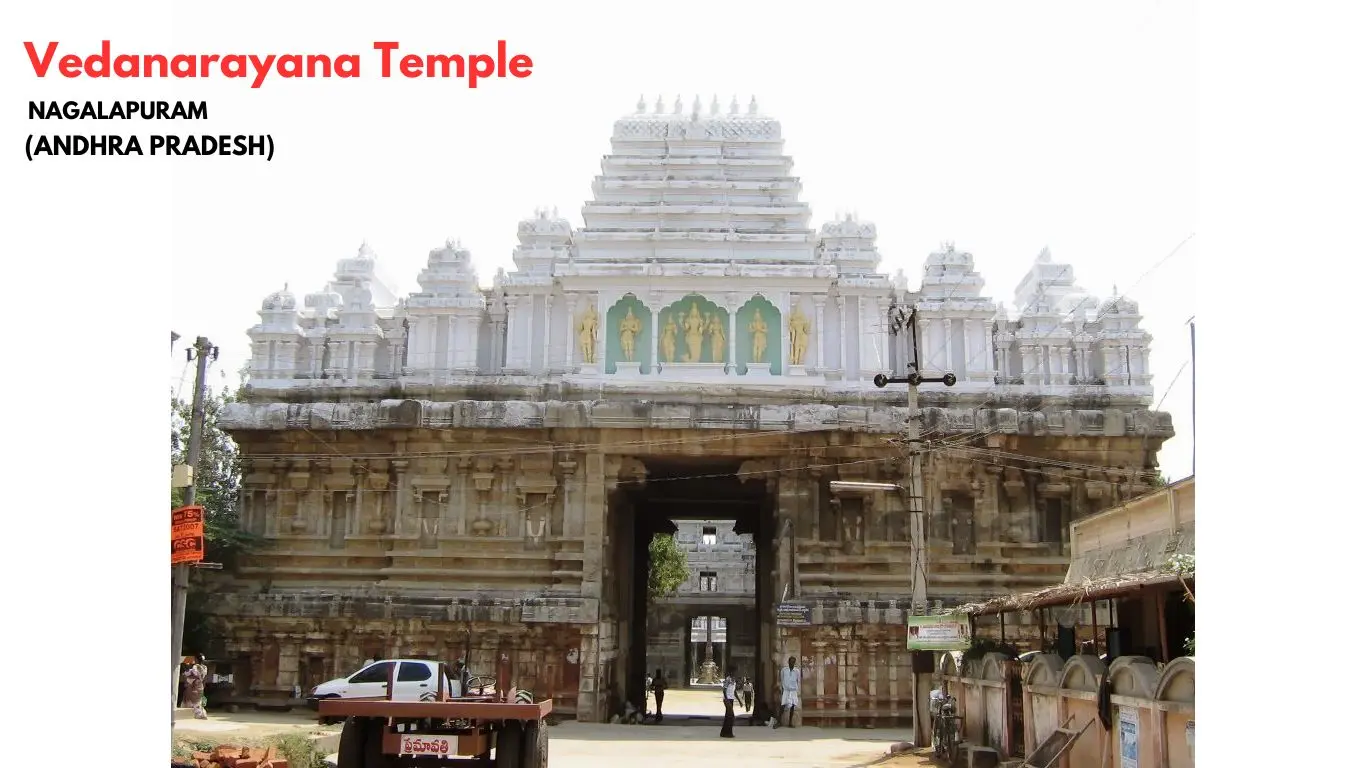
Unlike other popular incarnations of Vishnu, temples dedicated specifically to Matsya Aawtaar are relatively rare in India. However, a few महत्वपूर्ण and sacred temples do exist, mainly in South India. The most प्रसिद्ध is the Vedanarayana Swamy Temple in Nagalapuram (Andhra Pradesh), where Vishnu is worshipped in Matsya form. Other notable temples include the Matsya Narayana Temple in Chennai (Tamil Nadu) and the Matsya Narayana Temple at Omkar Hills in Bengaluru, which is one of the few temples in Karnataka dedicated to this avatar. These temples highlight that although Matsya Aawtaar is the first and foundational incarnation, its worship is more symbolic and less widespread compared to avatars like Rama or Krishna. Overall, only a handful of dedicated Matsya temples exist across India, emphasizing its unique and ancient spiritual significance.
👉 Explore all avatars here:
10 Avatars of Vishnu Explained (Dashavatara)
Conclusion: The First Step of Evolution and Consciousness
The Matsya Aawtaar is not just the first avatar of Vishnu—it is the foundation of life, knowledge, and transformation.
It reminds us that even in the deepest chaos, there is always a force guiding creation toward renewal.
What You Have Learned from Matsya Aawtaar
Matsya Aawtaar teaches that life begins in water, knowledge must be preserved, and divine guidance helps navigate chaos. It represents the continuity of existence and the eternal cycle of creation and renewal.
Frequently Asked Questions
What is Matsya Aawtaar?
Matsya Aawtaar is the first incarnation of Vishnu, appearing as a fish to save humanity and sacred knowledge during a great flood.
Why did Vishnu take the form of a fish?
Vishnu took the form of a fish because it was best suited to guide life through a cosmic flood and ensure survival.
What is the meaning of Matsya Aawtaar?
It symbolizes preservation, guidance, and the continuity of life and knowledge.
Explore More Avatars
-
Explore Detailed Vishnu Avatars
To understand the deeper meaning, stories, Stotra and symbolism of each incarnation, explore the detailed articles on the 10 avatars of Vishnu below. Each post explains the philosophy, scientific insight, and spiritual significance of the Dashavatara in depth.
- 👉 Kurm Aawtaar
👉 Varah Aawtaar
👉 Narasimha Aawtaar
👉 Vaman Aawtaar
👉 Parashuram Aawtaar - 👉 Ram Avtaar
- 👉 Krishna Awtaar
- 👉 Budha Avtaar
- 👉 Kalki Avtaar
- 👉 Dashavtaar stotra
e
- 👉 Kurm Aawtaar
