



परिचय
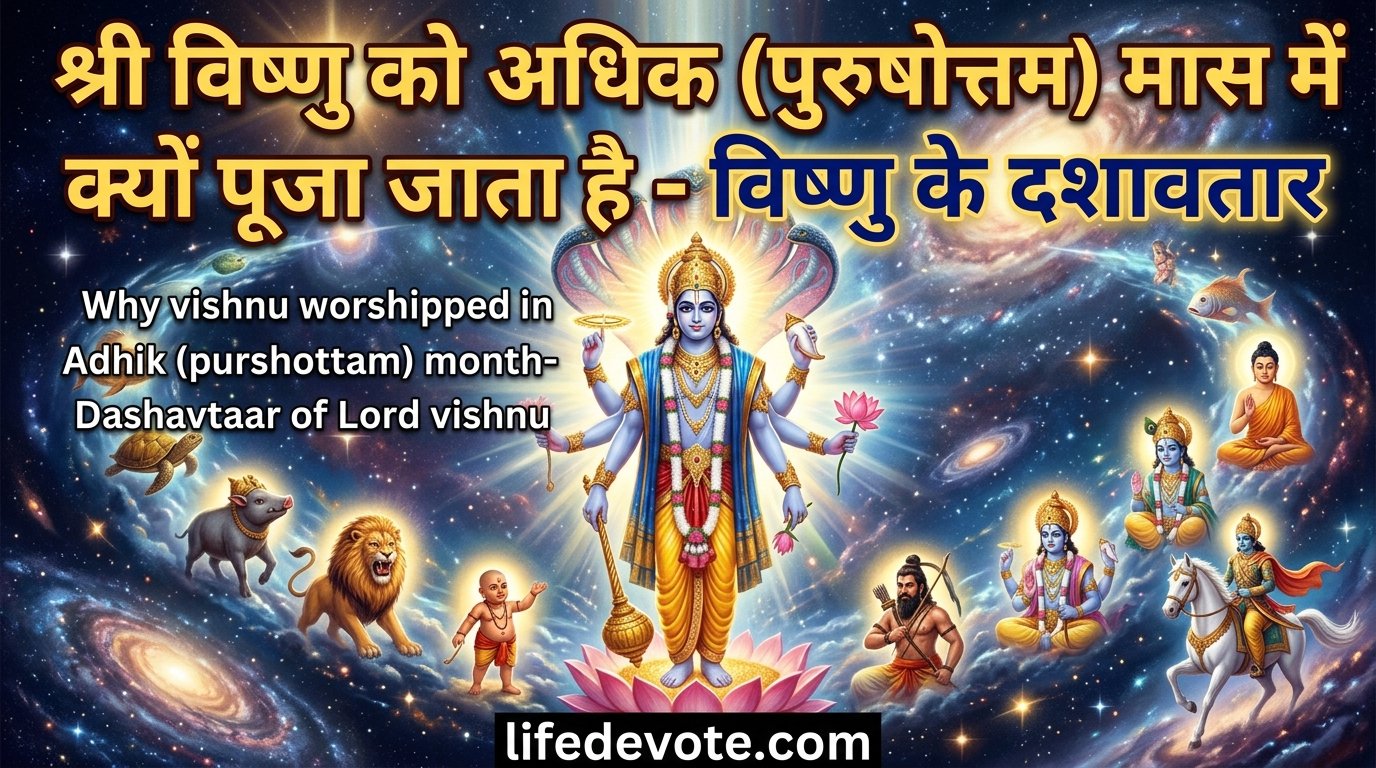
10 Avatars of Vishnu – अधिक मास, जिसे पुरुषोत्तम मास भी कहा जाता है, भगवान विष्णु को समर्पित सबसे पवित्र महीनों में माना जाता है। इस दिव्य काल में विष्णु के दशावतार केवल पौराणिक कथाएँ नहीं, बल्कि धर्म, संतुलन और जीवन के आध्यात्मिक विज्ञान का प्रतीक बन जाते हैं। आइए जानें कि अधिक मास में भगवान विष्णु की पूजा क्यों विशेष मानी जाती है और दशावतार का गहरा रहस्य क्या है। Adhik Maas Vishnu Dashavatar विष्णु के 10 अवतार की वह अद्भुत श्रृंखला है, जो जीवन के विकास, चेतना के विस्तार और धर्म के संतुलन को दर्शाती है। यह केवल पौराणिक कथाओं का संग्रह नहीं, बल्कि मानव जीवन की क्रमिक यात्रा का प्रतीक है—जहाँ हर अवतार एक विशेष परिस्थिति में संतुलन स्थापित करता है। यह हमें सिखाता है कि परिवर्तन ही जीवन का नियम है और हर संकट एक नए विकास का द्वार खोलता है।
अधिक मास में भगवान विष्णु की पूजा क्यों की जाती है? 10 Avatars of Vishnu
पुराणों के अनुसार अधिक मास पहले “मल मास” कहलाता था और अन्य महीनों की तुलना में उपेक्षित माना जाता था। तब भगवान विष्णु ने इसे अपना नाम देकर “पुरुषोत्तम मास” बनाया। इसलिए इस माह में:
- विष्णु सहस्रनाम पाठ
- गीता अध्ययन
- दान-पुण्य
- व्रत और ध्यान
विशेष फलदायी माने जाते हैं।
अगर आपके जीवन में परिवर्तन हो रहा है… तो समझिए — एक नया अवतार जन्म ले रहा है। विष्णु के 10 अवतार (दशावतार) केवल कथा नहीं, बल्कि जीवन का गहरा विज्ञान हैं।
विष्णु के 10 अवतार को सुनकर अनुभव करें
Adhik Maas Vishnu Dashavatar का दिव्य रहस्य — सुनिए यह आध्यात्मिक ऑडियो
अधिक मास केवल एक अतिरिक्त महीना नहीं, बल्कि आत्मशुद्धि, भक्ति और धर्म के पुनर्जागरण का पवित्र अवसर है। यदि यह प्रस्तुति आपको प्रेरित करे तो इसे अपने परिवार और मित्रों के साथ अवश्य साझा करें।
Adhik Maas Vishnu Dashavtaar का आध्यात्मिक महत्व 10 Avatars of Vishnu
अधिक मास को सनातन धर्म में आत्मशुद्धि, तप, दान और विष्णु भक्ति का महीना माना गया है। मान्यता है कि जब समय और ब्रह्मांडीय गणना में असंतुलन उत्पन्न हुआ, तब भगवान विष्णु ने इस अतिरिक्त मास को “पुरुषोत्तम मास” का दिव्य स्थान प्रदान किया।
विष्णु के दशावतार भी इसी संतुलन की पुनर्स्थापना का प्रतीक हैं। हर अवतार धर्म की रक्षा और अधर्म के विनाश हेतु प्रकट हुआ।
10 Avatars of Vishnu r: धर्म की रक्षा की दिव्य यात्रा
मत्स्य अवतार
ज्ञान और जीवन की रक्षा का प्रतीक।
कूर्म अवतार
समुद्र मंथन और ब्रह्मांडीय संतुलन का आधार।
वराह अवतार
पृथ्वी और धर्म की पुनर्स्थापना।
नरसिंह अवतार
भक्ति और सत्य की विजय।
वामन अवतार
अहंकार पर विनम्रता की विजय।
परशुराम अवतार
अन्याय और अत्याचार का अंत।
राम अवतार
मर्यादा, धर्म और आदर्श जीवन।
कृष्ण अवतार
प्रेम, कर्मयोग और चेतना का संदेश।
बुद्ध अवतार
करुणा, अहिंसा और आत्मजागरण।
कल्कि अवतार
अधर्म के अंत और नए युग की शुरुआत।
10 Avatars of Vishnu (संक्षेप में) और उनका अर्थ
| अवतार | प्रतीक | जीवन में अर्थ |
|---|---|---|
| मत्स्य | ज्ञान | संकट में सही मार्गदर्शन |
| कूर्म | स्थिरता | धैर्य और संतुलन बनाए रखना |
| वराह | उद्धार | कठिनाई से बाहर निकलना |
| नरसिंह | शक्ति | अहंकार और अन्याय का अंत |
| वामन | विनम्रता | अहंकार को नियंत्रित करना |
| परशुराम | न्याय | अनुशासन और संतुलन |
| राम | मर्यादा | आदर्श जीवन जीना |
| कृष्ण | ज्ञान | जीवन का संतुलन और समझ |
| बुद्ध | करुणा | शांति और जागरूकता |
| कल्कि | परिवर्तन | नए युग की शुरुआत |
पुरुषोत्तम मास का आध्यात्मिक संदेश
अधिक मास हमें यह सिखाता है कि जिसे संसार तुच्छ समझता है, ईश्वर उसे भी दिव्यता प्रदान कर सकते हैं। यही संदेश दशावतार में भी दिखाई देता है — जब-जब संसार में असंतुलन बढ़ा, भगवान विष्णु ने नए रूप में अवतार लेकर संतुलन स्थापित किया।
दशावतार क्या है (विष्णु के 10 अवतार का अर्थ) 10 Avatars of Vishnu
दशावतार भगवान विष्णु के 10 अवतार हैं, जो समय-समय पर संतुलन बनाए रखने के लिए प्रकट होते हैं।
दशावतार केवल 10 अलग-अलग कहानियाँ नहीं हैं, बल्कि यह जीवन के विभिन्न चरणों और परिस्थितियों का प्रतिनिधित्व करते हैं। प्रत्येक अवतार उस समय प्रकट होता है जब संतुलन बिगड़ जाता है और उसे पुनः स्थापित करने की आवश्यकता होती है।
- मत्स्य अवतार → जब ज्ञान को बचाना आवश्यक हो
- कूर्म अवतार → जब स्थिरता की आवश्यकता हो
- वराह अवतार → जब जीवन गहराई में डूब जाए
- नरसिंह अवतार → जब अहंकार अपनी सीमा पार कर जाए
यह दिखाता है कि जीवन में हर समस्या के लिए एक अलग समाधान होता है।
एक क्षण रुकिए…
आपके जीवन में दशावतार कैसे प्रकट होते हैं
दशावतार केवल इतिहास नहीं, बल्कि हर व्यक्ति के जीवन में घटित होने वाली प्रक्रिया है।
- जब आप संघर्ष में होते हैं → नरसिंह
- जब आपको धैर्य चाहिए → कूर्म
- जब आप गिरते हैं → वराह
- जब आप सीखते हैं → कृष्ण
हर व्यक्ति के भीतर ये सभी अवतार मौजूद हैं।
Adhik Maas Vishnu Dashavatar का रहस्य -विष्णु के 10 अवतार को वीडियो में समझें
भगवान विष्णु के दशावतार केवल पौराणिक घटनाएँ नहीं, बल्कि मानव चेतना, धर्म और जीवन संतुलन की शाश्वत यात्रा हैं। अधिक मास हमें उसी दिव्य संतुलन से जुड़ने का अवसर देता है।
विष्णु के 10 अवतार का वैज्ञानिक और मनोवैज्ञानिक अर्थ 10 Avatars of Vishnu
दशावतार को आधुनिक दृष्टिकोण से देखें तो यह जीवन के विकास (Evolution) का प्रतीक माना जा सकता है। जल से भूमि, पशु से मानव और अंततः चेतना के विकास तक की यह यात्रा एक गहरे वैज्ञानिक और दार्शनिक सिद्धांत को दर्शाती है।
- मत्स्य → जल जीवन
- कूर्म → उभयचर
- वराह → स्थलीय जीव
- मानव अवतार → चेतना का विकास
यह केवल कथा नहीं, बल्कि विकास की प्रक्रिया का प्रतीक है।
संबंधित लेख 10 Avatars of Vishnu
यदि आप विष्णु के 10 अवतार को और गहराई से समझना चाहते हैं, तो इन विषयों को भी पढ़ें:
10 Avatars of Vishnu निष्कर्ष
जब जीवन बदलता है… तो वह अचानक नहीं बदलता
वह धीरे-धीरे अवतार लेता है।
और वह अवतार आपके भीतर जन्म लेता है।
अपने ज्ञान का परीक्षण करें अक्सर पूछे जाने वाले प्रश्न” 10 Avatars of Vishnu
Adhik Maas Vishnu Dashavatar 10 Avatars of Vishnu
Q1. अधिक मास क्या होता है?
अधिक मास हिंदू पंचांग का अतिरिक्त महीना है, जिसे पुरुषोत्तम मास भी कहा जाता है।
Q2. अधिक मास में भगवान विष्णु की पूजा क्यों होती है?
क्योंकि भगवान विष्णु ने इस माह को अपना नाम और दिव्य स्थान प्रदान किया था।
Q3. दशावतार का क्या महत्व है?
दशावतार धर्म की रक्षा और जीवन संतुलन के प्रतीक माने जाते हैं।
Q4. पुरुषोत्तम मास में क्या करना चाहिए?
विष्णु पूजा, गीता पाठ, दान, जप और ध्यान करना शुभ माना जाता है।
Q5. क्या अधिक मास में व्रत रखना आवश्यक है?
यह अनिवार्य नहीं है, लेकिन श्रद्धा से किया गया व्रत अत्यंत फलदायी माना जाता है।
1. दशावतार क्या है?
दशावतार भगवान विष्णु के 10 अवतार हैं, जो समय-समय पर धर्म की रक्षा और संसार में संतुलन स्थापित करने के लिए प्रकट होते हैं।
2. विष्णु के 10 अवतार कौन-कौन से हैं?
विष्णु के 10 अवतार हैं:
मत्स्य, कूर्म, वराह, नरसिंह, वामन, परशुराम, राम, कृष्ण, बुद्ध और कल्कि।
3. दशावतार का वैज्ञानिक महत्व क्या है?
दशावतार को जीवन के विकास (Evolution) से जोड़ा जाता है — मछली से मानव तक का क्रम यह दर्शाता है कि जीवन धीरे-धीरे विकसित हुआ है।
4. सबसे महत्वपूर्ण अवतार कौन सा है?
सभी अवतार अपने समय और उद्देश्य के अनुसार महत्वपूर्ण हैं, लेकिन कृष्ण और राम जीवन मार्गदर्शन के लिए विशेष माने जाते हैं।
5. दशावतार हमें क्या सिखाता है?
दशावतार हमें सिखाता है कि जब भी जीवन में असंतुलन या संकट आता है, तो परिवर्तन आवश्यक होता है और हर समस्या का समाधान संभव है।
6. क्या दशावतार केवल पौराणिक कथा है?
नहीं, दशावतार केवल कथा नहीं बल्कि जीवन का प्रतीकात्मक और आध्यात्मिक विज्ञान है, जो हमें आत्मविकास और संतुलन का मार्ग दिखाता है।
विष्णु के सभी अवतारों की पूरी यात्रा- 10 Avatars of Vishnu
भगवान विष्णु के दशावतार केवल अलग-अलग कथाएँ नहीं, बल्कि जीवन और चेतना के विकास की एक निरंतर यात्रा हैं। प्रत्येक अवतार मानवता के विकास के एक विशेष चरण को दर्शाता है:
- दशावतार – विष्णु के सभी अवतारों का संपूर्ण दर्शन
- मत्स्य अवतार – जीवन और ज्ञान की रक्षा
- कूर्म अवतार – स्थिरता और संतुलन का आधार
- वराह अवतार – अंधकार से पृथ्वी का उद्धार
- नरसिंह अवतार – अहंकार का अंत और चेतना जागरण
- वामन अवतार – विनम्रता और संतुलन का रहस्य
- परशुराम अवतार – शक्ति और अनुशासन का संघर्ष
- राम अवतार – मर्यादा और आदर्श नेतृत्व
- कृष्ण अवतार – प्रेम, ज्ञान और चेतना का संतुलन
- बुद्ध अवतार – जागरूकता और शांति का मार्ग
- कल्कि अवतार – कलियुग का अंत और नई चेतना का उदय
