



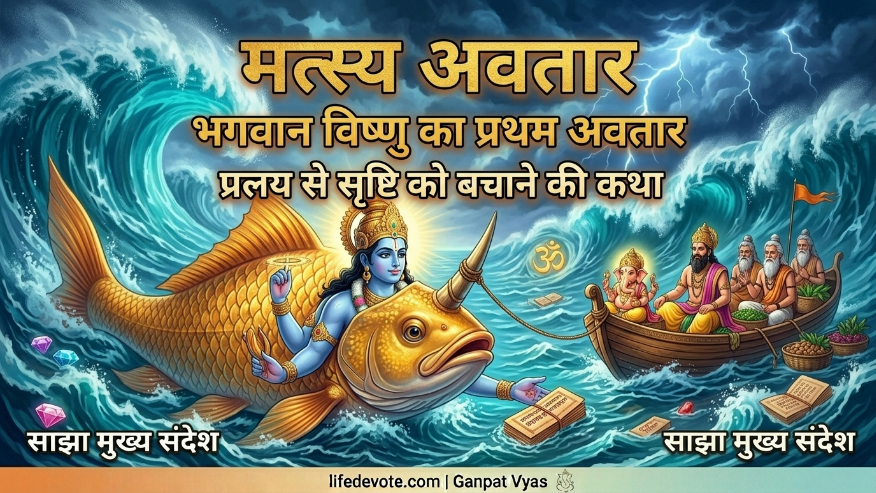
Matsya Aawtaar : प्रलय से ज्ञान की रक्षा और नई शुरुआत का रहस्य
Matsya Aawtaar भगवान का पहला अवतार है, जो सृष्टि की रक्षा और ज्ञान के संरक्षण का प्रतीक है। राजा मनु, प्रलय और एक छोटी मछली की यह कथा केवल पौराणिक घटना नहीं, बल्कि जीवन के उस सिद्धांत को दर्शाती है कि जब सब कुछ समाप्त होता प्रतीत होता है, तभी एक नई शुरुआत जन्म लेती है। यह अवतार हमें सिखाता है कि संकट के समय सही मार्गदर्शन ही सबसे बड़ी शक्ति होता है।
यदि आप मत्स्य अवतार की कथा को केवल पढ़ना नहीं, बल्कि अनुभव करना चाहते हैं, तो यह ऑडियो आपको उस प्रलय, मार्गदर्शन और नई शुरुआत की गहराई तक ले जाएगा। इसे शांत मन से सुनें और हर संकेत को महसूस करें।
क्या आपके जीवन में कभी ऐसा क्षण आया है जब सब कुछ समाप्त लगता था… और अचानक कोई रास्ता मिल गया?
वही आपके भीतर का “मत्स्य अवतार” है।
Matsya Aawtaar का सार
| तत्व | अर्थ |
|---|---|
| मत्स्य (मछली) | ज्ञान और मार्गदर्शन |
| प्रलय | संकट और परिवर्तन |
| मनु | मानव चेतना |
| नाव | विश्वास और संरक्षण |
Matsya Aawtaar कथा
मत्स्य अवतार कथा के अनुसार, एक दिन राजा मनु को एक छोटी मछली मिली, जिसने उनसे रक्षा करने का निवेदन किया। धीरे-धीरे वह मछली विशाल रूप धारण करती गई और अंततः भगवान विष्णु के रूप में प्रकट हुई।
उसने मनु को चेतावनी दी कि एक भयंकर प्रलय आने वाला है और उन्हें एक नाव बनाकर सभी जीवों के बीज सुरक्षित रखने होंगे। जब प्रलय आया, तो मत्स्य ने उस नाव को सुरक्षित मार्ग दिखाया और नई सृष्टि की शुरुआत कराई।
- छोटी मछली → छोटे संकेतों की अनदेखी न करें
- प्रलय → जीवन का बड़ा संकट
- नाव → विश्वास और तैयारी
- मार्गदर्शन → सही दिशा ही सुरक्षा है
Matsya Aawtaar का गहरा अर्थ
यह अवतार केवल सृष्टि की रक्षा की कथा नहीं, बल्कि यह बताता है कि ज्ञान ही वह शक्ति है जो हमें हर संकट से बाहर निकाल सकती है। जब जीवन में अंधकार छा जाता है, तब सही जानकारी और जागरूकता ही दिशा दिखाती है।
- ज्ञान = सुरक्षा
- चेतना = दिशा
- संकट = परिवर्तन का अवसर
Matsya Aawtaar वैज्ञानिक और मनोवैज्ञानिक अर्थ
मत्स्य अवतार को वैज्ञानिक दृष्टिकोण से देखें तो यह जीवन की शुरुआत (जल से उत्पत्ति) का संकेत देता है। मनोवैज्ञानिक रूप से यह दर्शाता है कि जब व्यक्ति भ्रम या संकट में होता है, तब उसकी आंतरिक चेतना उसे सही दिशा दिखाती है।
- जल → जीवन की शुरुआत
- प्रलय → मानसिक संकट
- मत्स्य → आंतरिक मार्गदर्शन
जीवन में Matsya Aawtaar कैसे प्रकट होता है
यह अवतार केवल प्राचीन कथा नहीं, बल्कि हर व्यक्ति के जीवन में घटित होने वाली प्रक्रिया है। जब भी हम कठिन परिस्थिति में होते हैं, तब हमें किसी न किसी रूप में मार्गदर्शन प्राप्त होता है।
- संकट के समय सही सलाह मिलना
- अचानक कोई रास्ता दिखाई देना
- गलत निर्णय से बच जाना
यह सब आपके जीवन में “मत्स्य अवतार” का ही रूप है
एक क्षण रुकिए
क्या आपके जीवन में भी कभी ऐसा समय आया है जब सब कुछ समाप्त लगता था…
और अचानक कोई रास्ता मिल गया?
वही आपका मत्स्य अवतार था
Matsya Aawtaar को वीडियो में समझें
अब जब आपने मत्स्य अवतार का अर्थ समझ लिया है, यह वीडियो पूरी कथा को दृश्य रूप में स्पष्ट करता है—जिससे आप प्रलय, मनु और दिव्य मार्गदर्शन को और गहराई से महसूस कर पाएंगे।
वीडियो देखने के बाद विचार करें:
क्या आप अपने जीवन में मिलने वाले छोटे संकेतों को पहचान पाते हैं, या उन्हें अनदेखा कर देते हैं?
अक्सर वही छोटे संकेत हमें बड़े संकट से बचाते हैं।
संबंधित ज्ञान
जैसे कूर्म अवतार स्थिरता सिखाता है और वराह अवतार जीवन को ऊपर उठाता है…
वैसे ही मत्स्य अवतार सही दिशा देता है
अक्सर पूछे जाने वाले प्रश्न Matsya Aawtaar
मत्स्य अवतार क्यों लिया गया?
सृष्टि और ज्ञान की रक्षा के लिए
मत्स्य अवतार क्या सिखाता है?
संकट में सही मार्गदर्शन
मत्स्य अवतार का वैज्ञानिक अर्थ क्या है?
जीवन की शुरुआत जल से
Matsya Aawtaar निष्कर्ष
जब जीवन में सब कुछ डूबता हुआ लगता है…
तभी एक नई शुरुआत जन्म लेती है
मत्स्य अवतार हमें सिखाता है —
हर संकट में एक छुपा हुआ मार्ग होता है
विष्णु के सभी अवतारों की पूरी यात्रा
भगवान विष्णु के दशावतार केवल अलग-अलग कथाएँ नहीं, बल्कि जीवन और चेतना के विकास की एक निरंतर यात्रा हैं। प्रत्येक अवतार मानवता के विकास के एक विशेष चरण को दर्शाता है:
- दशावतार – विष्णु के सभी अवतारों का संपूर्ण दर्शन
- मत्स्य अवतार – जीवन और ज्ञान की रक्षा
- कूर्म अवतार – स्थिरता और संतुलन का आधार
- वराह अवतार – अंधकार से पृथ्वी का उद्धार
- नरसिंह अवतार – अहंकार का अंत और चेतना जागरण
- वामन अवतार – विनम्रता और संतुलन का रहस्य
- परशुराम अवतार – शक्ति और अनुशासन का संघर्ष
- राम अवतार – मर्यादा और आदर्श नेतृत्व
- कृष्ण अवतार – प्रेम, ज्ञान और चेतना का संतुलन
- बुद्ध अवतार – जागरूकता और शांति का मार्ग
- कल्कि अवतार – कलियुग का अंत और नई चेतना का उदय
